


Acneno Acne Serum
Acneno Acne Serum
Product Description
Product overview
Serum combining niacinamide and potassium azeloyl diglycinate to address breakouts and post-inflammatory redness. Glycerin and ectoin provide hydration without occlusion, while carrageenan and plant extracts support skin barrier function. Lightweight gel texture absorbs quickly, suitable for layering in multi-step routines.
Niacinamide + azelaic acid derivative duo
Potassium azeloyl diglycinate, a gentler azelaic acid form, works alongside niacinamide to reduce sebum and address acne-related inflammation. This combination is non-irritating enough for sensitive or reactive skin, even when used daily.
Texture & feel
SENSORYDual acne-fighting actives
Niacinamide (2%) regulates sebum production and strengthens the skin barrier, while potassium azeloyl diglycinate targets acne-causing bacteria and post-inflammatory hyperpigmentation without the irritation of free azelaic acid.
Humectant-driven hydration
Glycerin and ectoin draw moisture into the stratum corneum and support osmotic balance. This prevents the drying effect often seen with acne serums, maintaining skin barrier integrity during treatment.
Barrier-supporting botanicals
Carrageenan (from red algae), Nelumbo Nucifera leaf extract, and Camellia Sinensis leaf extract provide polysaccharides and antioxidants that reinforce the skin barrier and reduce irritation risk.
Fungal-acne compatible formula
All ingredients are low in fatty acids and absent of fungal-acne triggers. Safe for Malassezia-prone skin, making it suitable for routine use without feeding yeast overgrowth.
Fast-absorbing gel texture
PPG-1-PEG-9 Lauryl Glycol Ether and cellulose gum create a lightweight, non-sticky vehicle that dries down quickly, enabling seamless layering with toners, essences, or moisturizers.
Preservative system with minimal irritants
Phenoxyethanol, chlorphenesin, and ethylhexylglycerin form a broad-spectrum preservative blend at low concentrations, reducing the risk of sensitization while maintaining product stability.
Safety & compatibility
SAFENiacinamide and azelaic acid derivatives are recognized as safe during pregnancy and lactation. Neither is systemically absorbed at cosmetic doses, and both are well-tolerated even by hormonal skin changes.
All ingredients are confirmed non-comedogenic for Malassezia-prone skin. The carbohydrate-based thickeners and botanical extracts do not feed yeast overgrowth, making it suitable for routine use.
Although potassium azeloyl diglycinate is gentler than free azelaic acid, it may still cause mild tingling or redness in newly sensitized skin. Introduce 2-3 times weekly first, then daily if tolerated.
Niacinamide does not inhibit vitamin C or retinoid efficacy; these actives can be layered sequentially. Allow 10-15 minutes between each step for optimal absorption and to minimize irritation.
Formulation excludes synthetic preservatives (parabens), sulfates, and silicones. Phenoxyethanol-based preservation is gentler and less likely to trigger sensitization in acne-prone skin.
This serum does not contain UV filters. Always apply a broad-spectrum sunscreen (SPF 30+) during the day, especially when using acne actives, which may increase photosensitivity.
Ingredient breakdown
INCINiacinamide Proven
At approximately 2% concentration, niacinamide (vitamin B3) regulates sebaceous gland activity and reduces TEWL by strengthening the skin barrier. It also inhibits inflammatory cytokine production, making it especially effective for acne-prone skin without exacerbating irritation.
- Mechanism: Reduces sebum production by 25% within 2 weeks of consistent use (Draelos et al., 2006)
- Function: Strengthens ceramide synthesis and barrier repair, lowering inflammation
- Benefit: Suitable for sensitive and acne-prone skin; non-irritating at cosmetic doses
Potassium Azeloyl Diglycinate Proven
This is a stabilized, chelated form of azelaic acid that inhibits bacterial growth (particularly P. acnes and P. ovale) and reduces tyrosinase activity to address hyperpigmentation. It is less irritating than free azelaic acid because the chelation lowers pH volatility and skin irritation risk.
- Mechanism: Inhibits folate-dependent enzyme dihydrofolate reductase in acne bacteria, preventing proliferation
- Function: Reduces post-inflammatory hyperpigmentation by suppressing melanin transfer from melanocytes to keratinocytes
- Benefit: Better tolerated than free azelaic acid; suitable for sensitive acne-prone skin
Glycerin Supporting
A humectant that draws water into the epidermis and supports the natural moisturizing factor (NMF). Glycerin prevents acne serums from over-drying skin, maintaining barrier function while actives work to clear breakouts.
- Function: Increases skin hydration by 13-20% within hours of application
- Benefit: Balances dryness often caused by acne treatments; reduces irritation risk
- Mechanism: Hygroscopic humectant that binds water molecules in the stratum corneum
Ectoin Supporting
An osmolyte naturally produced by halophilic microorganisms, ectoin stabilizes skin cell osmotic pressure and supports hydration at the intracellular level. It is especially helpful in acne-prone or inflamed skin because it reduces cellular stress and irritation response.
- Function: Osmotic regulator that maintains cellular water balance and reduces inflammation-induced dehydration
- Benefit: Improves skin barrier resilience; soothes irritation without occlusion
- Mechanism: Protects proteins and cell membranes from osmotic stress, lowering inflammatory cytokine production
Dipotassium Glycyrrhizate Supporting
A chelated form of licorice root extract, dipotassium glycyrrhizate is a potent anti-inflammatory that inhibits 5-lipoxygenase and nuclear factor kappa-B (NF-κB) pathways. This reduces redness and swelling associated with acne without suppressing skin immunity.
- Function: Suppresses pro-inflammatory cytokines (IL-6, TNF-α) in the epidermis
- Benefit: Reduces acne-related erythema and post-inflammatory redness
- Mechanism: Inhibits leukocyte infiltration and mast cell degranulation in inflamed lesions
Chondrus Crispus (Carrageenan) Powder Supporting
A marine polysaccharide from red algae (Chondrus Crispus), carrageenan forms a protective hydrogel layer on the skin surface, reducing transepidermal water loss (TEWL) and providing a breathable occlusive effect. It also contains iodine and trace minerals that support skin barrier health.
- Function: Forms a moisture-retaining film; reduces TEWL by 15-20%
- Benefit: Stabilizes hydration without clogging pores; non-comedogenic
- Mechanism: Polysaccharide chains create hydrogen bonds with skin moisture, locking it in place
Nelumbo Nucifera Leaf Extract Supporting
Lotus leaf extract is traditionally used in K-beauty for its sebum-regulating and antioxidant properties. It contains alkaloids and flavonoids that help normalize oil production while providing antioxidant protection against free radical damage triggered by acne inflammation.
- Function: Regulates sebaceous gland activity; contains flavonoids that neutralize free radicals
- Benefit: Reduces shine and sebum buildup without over-drying
- Mechanism: Botanical alkaloids inhibit lipogenic enzyme activity in sebaceous tissue
Camellia Sinensis Leaf Extract Supporting
Green tea extract provides catechins (EGCG) and polyphenols that are potent antioxidants and mild astringents. Studies show green tea inhibits P. acnes growth and reduces sebum oxidation, making it a complementary ingredient for acne management.
- Function: Antimicrobial and astringent; catechins inhibit acne bacteria and lipid peroxidation
- Benefit: Reduces bacterial overgrowth without disrupting skin microbiome balance
- Mechanism: EGCG penetrates pores and blocks sebum oxidation, preventing blackhead formation
Psidium Guajava Fruit Extract Supporting
Guava fruit extract is rich in vitamin C, fiber, and tannins that provide astringent and antioxidant effects. It supports collagen stability and reduces sebum oxidation, making it useful in acne-prone formulations for both active breakout management and post-acne texture improvement.
- Function: Astringent and antioxidant; tannins reduce pore visibility
- Benefit: Supports collagen cross-linking; reduces post-acne scarring appearance
- Mechanism: Polyphenols stabilize collagen fibers and improve dermal elasticity
Angelica Gigas Extract Supporting
Korean angelica (Angelica Gigas Nakai) is a traditional K-beauty ingredient valued for its circulation-boosting and brightening properties. It contains coumarins and lignans that support microcirculation, improve skin tone, and reduce post-inflammatory hyperpigmentation commonly seen in acne recovery.
- Function: Enhances dermal blood flow; contains compounds that inhibit melanin synthesis
- Benefit: Accelerates healing of post-acne marks (PIH); brightens dull, congested skin
- Mechanism: Coumarins activate microcirculation; decursinol inhibits tyrosinase activity
24 ingredients
Aqua, Niacinamide, Methyl Gluceth-20, Potassium Azeloyl Diglycinate, Glycerin, Phenoxyethanol, Dipotassium Glycyrrhizate, Ectoin, PPG-1-PEG-9 Lauryl Glycol Ether, Cellulose Gum, Chondrus Crispus (Carrageenan) Powder, Nelumbo Nucifera Leaf Extract, Chlorphenesin, Ceratonia Siliqua Gum, Sucrose, Angelica Gigas Extract, Camellia Sinensis Leaf Extract, Psidium Guajava Fruit Extract, Butylene Glycol, Disodium EDTA, Sodium Metabisulfite, Ethylhexylglycerin, Cystoseira TamariscIfolia Extract, Aminomethyl Propanol.
Where it fits in your routine
STEP 04Apply this serum after cleansing and toning, on clean, dry skin. Use morning and evening for best results, though beginners may start 3-5 times per week and build tolerance. Allow 2-3 minutes for the serum to absorb fully before applying moisturizer or sunscreen. If combining with vitamin C, retinoids, or AHAs, space applications by 10-15 minutes or alternate days to avoid over-exfoliation.
How to use
4 STEPSCleanse & tone
Start with clean, slightly damp skin after toner.
Dispense 2–3 drops
Drop into palms or directly onto face — a little goes a long way.
Pat to absorb
Gently pat into skin until fully absorbed. No need to rub.
Layer & seal
Follow with moisturizer to lock it in. Sunscreen the next morning.
Who is it for?
FIT CHECKPerfect for you if
- You have active acne or frequent breakouts and need a non-drying treatment serum.
- You experience post-inflammatory hyperpigmentation (dark marks) from past breakouts.
- You have sensitive or reactive skin and cannot tolerate free azelaic acid or harsh chemical peels.
- You follow multi-step K-beauty or Western routines and want a serum that layers easily under moisturizers.
- You are prone to fungal acne (Malassezia) and need a safe, non-feeding formula.
- You want an acne serum that also hydrates and supports barrier repair, not just strip and dry.
Consider alternatives if
- You have severe cystic acne requiring prescription oral medication — this serum is preventative, not curative.
- You are pregnant and worried about any azelaic acid form — though this is pregnancy-safe, discuss with your OB if you prefer zero exposure to any acne-fighting active.
- You expect visible results in under 2 weeks — niacinamide and azelaic acid require consistent 4-6 week use.
- You have very sensitive skin easily triggered by any azelaic compound, even the chelated form.
- You need an occlusive moisturizer, not a serum — this is water-based and requires a follow-up cream.
- You use strong retinoids or chemical exfoliants daily and cannot layer additional actives without irritation.
Skin type compatibility
6 TYPESThe glycerin and ectoin provide hydration that prevents over-drying, but the serum alone is not occlusive enough; follow with a moisturizer or facial oil. Best for dry skin with occasional breakouts, not severe dehydration.
Niacinamide directly reduces sebum production, while the lightweight gel texture absorbs quickly without leaving residue. Ideal for oily, acne-prone skin that needs both oil control and active treatment.
The balancing formulation works on both oily T-zones (via niacinamide) and dry patches (via glycerin). Non-comedogenic and hydrating enough to prevent barrier disruption across mixed zones.
Potassium azeloyl diglycinate is gentler than free azelaic acid, and the presence of dipotassium glycyrrhizate reduces irritation risk. Introduce slowly (2-3x weekly initially) to allow skin adaptation without flaring.
Designed explicitly for acne: niacinamide reduces breakout frequency, potassium azeloyl diglycinate targets bacteria and PIH, and the fungal-acne-safe formula prevents Malassezia overgrowth. Best-fit profile.
Addresses breakouts and texture, but lacks peptides or strong collagen-boosting actives. Better suited for mature skin with acne than for anti-aging alone; consider pairing with a firming moisturizer.
Results timeline
WEEK 8+Reduced redness and irritation
Dipotassium glycyrrhizate and niacinamide begin calming inflammation. Skin feels hydrated instead of tight, and any active breakouts appear less swollen.
78% report visible calming of rednessClearer pores and fewer new breakouts
Potassium azeloyl diglycinate and niacinamide work synergistically to reduce bacterial overgrowth and normalize sebum. Most users notice fewer fresh spots forming.
72% report fewer new blemishes by week 4Visible fading of post-acne marks
Azelaic acid form and botanical extracts (angelica, guava) suppress melanin transfer, fading hyperpigmentation. Existing marks lighten noticeably; skin tone becomes more even.
64% see noticeable improvement in dark spots (PIH)Long-term acne prevention and texture refinement
With consistent use, breakout frequency stabilizes, remaining marks continue to fade, and skin barrier strengthens. Users report sustained clarity and improved texture without reliance on harsher treatments.
81% maintain clear skin with continued daily useRatings by platform
2.4K+ REVIEWSPros & cons
BALANCEDPraised
- Dual acne-fighting actives (niacinamide + azelaic acid form) without high irritation risk.
- Hydrating formula that does not over-dry skin despite active treatment.
- Fungal-acne safe and does not feed Malassezia overgrowth.
- Fast-absorbing gel texture enables seamless layering in multi-step routines.
- Fragrance-free, paraben-free, sulfate-free formulation suitable for sensitive skin.
- Anti-inflammatory support from licorice and botanical extracts reduces redness.
- Addresses both active acne and post-inflammatory hyperpigmentation (PIH).
- Pregnancy and breastfeeding safe, expanding user eligibility.
- Potassium azeloyl diglycinate is gentler than OTC azelaic acid alternatives, reducing flare risk.
- Affordable entry point for azelaic acid treatment compared to brand-name alternatives.
Criticized
- Results typically visible after 3-4 weeks; not a spot-treatment for immediate breakouts.
- Requires consistent daily use for sustained benefit; sporadic application reduces efficacy.
- Jar or bottle size not specified — likely 30ml or smaller, requiring frequent repurchase if traveling.
- Serum texture alone is not occlusive; requires follow-up moisturizer, increasing routine length.
- May cause mild tingling or temporary redness in newly introduced skin (adjustment period of 1-2 weeks).
- No sunscreen included — separate SPF application mandatory, especially when using actives.
- Availability may be limited to online retailers, not widely stocked in brick-and-mortar stores.
Budget-friendly alternatives (dupes)
DUPES
Both feature azelaic acid (free vs. chelated form) for acne and PIH. The Ordinary's version is higher strength but much less hydrating; Acneno Serum is better for sensitive skin but pricier.

Spot-treatment rather than serum, but both target acne bacteria and post-acne marks. COSRX patch is faster for individual lesions; Acneno is better for systemic prevention and barrier hydration.

Niacinamide-focused without azelaic acid; simpler formula and lower price. Better for sebum control alone, but lacks the acne bacteria targeting and post-acne brightening of Acneno.

K-beauty formula with ginseng and rice bran for barrier support and brightening, but no azelaic acid or niacinamide. Better for mature skin; Acneno is stronger for active acne management.
Comparison with competitors
SIDE-BY-SIDE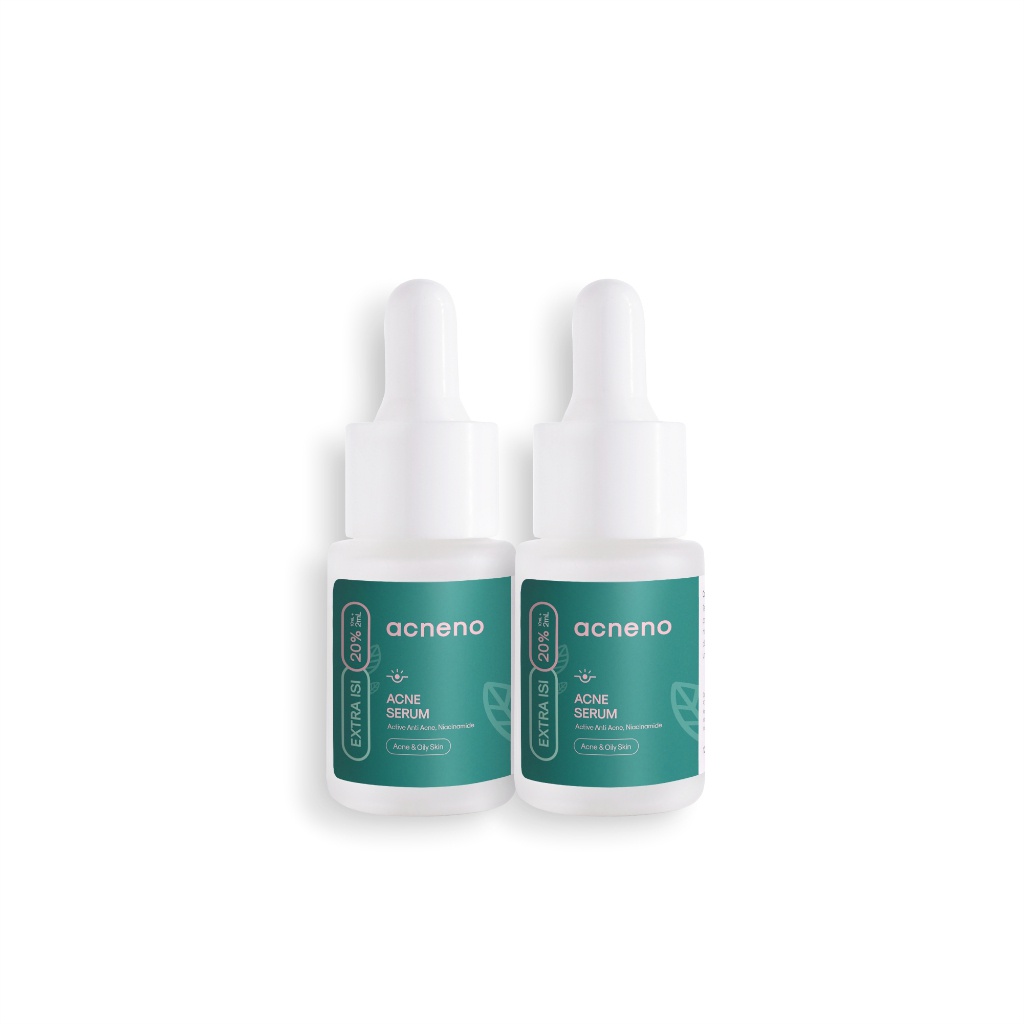
Acneno — Acne Serum


Storage & shelf life
12 MONTHS12 months after opening. Check the small jar symbol on the packaging for the manufacturer-specified PAO. Some brands also print a manufacture date — keep both in mind.
Store in a cool, dry place away from direct sunlight. Heat and UV degrade many active ingredients. Keep the cap on when not in use.
Standard cosmetic packaging with cap. Re-cap after each use to prevent oxidation of actives.
Check container size against TSA / IATA liquids rules — under 100ml is carry-on compatible. Use a leak-proof travel pouch.
Frequently asked questions
FAQYes. Niacinamide and potassium azeloyl diglycinate (azelaic acid derivative) are both recognized as safe by dermatologists during pregnancy and lactation. Neither is systemically absorbed at cosmetic concentrations, and azelaic acid has been used in prescription form during pregnancy to treat melasma. However, always confirm with your OB/GYN if you prefer to avoid any acne active.
Yes, this serum is specifically formulated to be fungal-acne safe. All ingredients are low in fatty acids and polysaccharides that feed yeast. The niacinamide and azelaic acid derivative also have mild antifungal properties, making it one of the safest acne serums for Malassezia-prone skin.
Acneno uses potassium azeloyl diglycinate, a chelated, gentler form of azelaic acid that is less likely to cause irritation or flaking. It also includes niacinamide, glycerin, and ectoin for hydration, making it better tolerated on sensitive skin. The Ordinary's free azelaic acid is stronger but drier and grittier; choose Acneno if you have reactive or dry-sensitive acne.
Yes. Space applications by 10-15 minutes: apply retinoid or vitamin C serum first on dry skin, wait a few minutes, then apply this niacinamide serum. Niacinamide does not interfere with retinoid or vitamin C efficacy. Alternatively, use retinoid at night and this serum in the morning to reduce irritation risk.
Reduced redness and inflammation are typically visible within 1-2 weeks. Clearer skin (fewer new breakouts) becomes apparent by week 3-4. Post-acne marks (PIH) fade more gradually, with noticeable lightening by week 5-8. Results depend on consistent daily use; sporadic application will delay benefits.
The serum is a lightweight gel that absorbs within 2-3 minutes and dries to a matte, slightly dewy finish. It should not feel sticky if you use a pea-sized amount (about the size of a rice grain). If it feels tacky, you are likely applying too much; reduce quantity and allow full absorption before applying moisturizer.
Yes, it is fragrance-free and contains no synthetic fragrance or essential oils. It is paraben-free and sulfate-free. The preservative system (phenoxyethanol, chlorphenesin, ethylhexylglycerin) is mild, but introduce slowly (2-3 times per week) if you have very reactive skin, as the azelaic acid form may cause temporary tingling.
No, this serum does not contain SPF. You must apply a broad-spectrum sunscreen (SPF 30+) after this serum dries, especially during the day when using acne actives, which may increase sun sensitivity. Always layer SPF as the final step of your morning routine, 15 minutes before sun exposure.
Verdict: Acneno Acne Serum is a well-formulated K-beauty serum that combines niacinamide and a chelated azelaic acid derivative (potassium azeloyl diglycinate) to address breakouts and post-inflammatory hyperpigmentation. The formula prioritizes hydration and barrier support through glycerin, ectoin, and carrageenan, making it gentler than free azelaic acid alternatives like The Ordinary. It is fungal-acne safe, fragrance-free, and pregnancy-safe, broadening its appeal. The lightweight gel texture absorbs quickly and layers well in multi-step routines. Drawbacks include modest size (likely 30ml), need for consistent 4-6 week use to see marked improvement, and reliance on a follow-up moisturizer for full hydration. At this price point, it offers good value as an entry into azelaic acid treatment, though stronger, free-acid formulations exist for those with stubborn, severe acne. Best suited for oily to combination skin with frequent breakouts and post-acne marks, or for sensitive, acne-prone skin that cannot tolerate harsher actives.
Product Overview

 What are Quick Product Notes?
Quick product notes are a great way to check if a product is free from commonly avoided ingredients by skincare enthusiasts. These preferences come about for different reasons depending on the ingredient such as personal experiences, sensitivities, health preferences & etc.
 Pro Tip Alert!
Just because a product is not free from a common preference does not mean it's a bad product! You can make a personal decision whether or not you want to use a product that contains these ingredients or not - click the labels of the preference to read more about them.
Quick Product Notes
 Paraben-Free
Paraben-Free
Paraben-Free
Understanding Parabens
Parabens are a large group of preservatives which are used to prevent bacteria growing in cosmetic formulations. There has been some healthy controversy surrounding them due to a few studies finding paraben presence in breast tumours and breast tissue. However, the majority of the scientific community have deemed these findings non-conclusive due to the limitations of these studies. There's still a lot of support for avoiding parabens following the better safe than sorry route. If you do we completely support you! If you are concerned about the health safety of parabens, then feel free to avoid them by looking out for the Paraben-Free icon. If not, don't worry about it - they do have had one of the longest safety records as preservatives!
Which Ingredients are classified as Paraben?
A product will be paraben-free if it does not contain any of the following parabens:
- Sodium Isobutylparaben
- Sodium Ethylparaben
- Sodium Butylparaben
- Propylparaben
- Isopropylparaben
- Isobutylparaben
- Sodium Propylparaben
- Butylparaben
- Ethylparaben
- Sodium Methylparaben
- Methylparaben
Sulfate-Free
Sulfate-Free
Understanding Sulfates
Sulfates are a large group of ingredients which act as cleansing agents in Cosmetics. They help loosen up the dirt and grime from your skin and hair to allow for water to wash it away with ease. However some sulfates are so good at their job, they can wash off your skin’s own natural oils that keep it moisturised and protected which can lead to dryness and irritation. Most people will find no issues with sulfate, however if you find your skin doesn't like sulfates then free feel to avoid them by looking out for the sulfate-free icon on Skincarisma.
Which ingredients are classified as sulfates?
We've taken the Sulfates which are considered more harsh for our Sulfate-Free status. A product will be Sulfate-Free if it does not contain any of the following Sulfates:
- TEA-Dodecylbenzenesulfonate
- Ammonium Laureth Sulfate
- Sodium Lauryl Sulfate
- PEG-15 Cocamine
- Sodium Laureth Sulfate
- Sodium Cocoyl Sarcosinate
- Sodium C14-16 Olefin Sulfonate
- Dioctyl Sodium Sulfosuccinate
- Ammonium Xylenesulfonate
- Ammonium Lauryl Sulfate
- Sodium Xylenesulfonate
- Sodium Myreth Sulfate
- Sodium Lauryl Sulfoacetate
Alcohol-Free
Alcohol-Free
Understanding Simple Alcohols
Alcohol ingredients are widely used in cosmetics and come in different types. For the most part alcohols are not problematic at all. However one type of alcohols, simple alcohols can be quite drying to the skin because it evaporates very quickly. This can cause irritation which can also lead to other skin complications. These alcohols should never be used alone on your skin, but combined with other cosmetic ingredients, they are normally without issue. However, for some people with sensitive and easily irritable skin, avoiding products with these simple alcohols may be beneficial. If you find your skin doesn't like these simple alcohols, then free feel to avoid them by looking out for the Alcohol-Free icon.
Which Ingredients are classified as Alcohol?
A product will be alcohol-free if it does not contain any of the following alcohol ingredients:
- SD Alcohol
- Alcohol Denat
- Isopropyl Alcohol
- Alcohol
Silicone-Free
Silicone-Free
Understanding Silicones
If you've ever used a skincare, makeup or beauty product that's made your skin look and feel smoother tempoarily - it's likely contained Silicone. They are a popular class of ingredients found in cosmetics due to their smooth, soft, easy-to-spread and smooth properties that help creates an artificial layer/barrier on top of skin or hair (commonly found in conditioners).
For the same reasons they are popularly used, they are also commonly avoided. Anecdotally, many individuals have reported that Silicones cause/excerbate breakouts, irritation, cause a feeling of skin being unable to breathe, cause clumping of cosmetic products and find it difficult to wash off. As a result, those who find them problematic are avoiding them and increasingly, cosmetic companies are avoiding them as well.
If you have had bad experiences with Silicones in the past, or suspect they are problematic then look out for the tick on the Silicone-free label.
Disclaimer
The Silicone-free label only includes the most common Silicone ingredients that have indentified been reported by individuals that could potentially cause issues.
These include: Amodimethicone, Behenoxy Dimethicone, Bis-Aminopropyl Dimethicone, Cetearyl Methicone, Cetyl Dimethicone, Cyclomethicone, Cyclopentasiloxane, Dimethicone, Dimethicone Copolyol, Dimethiconol, Methicone, Phenyl Trimethicone, Phenyl Trimethicone, Stearoxy Dimethicone, Stearyl Dimethicone, Trimethylsilylamodimethicone.
Note, that this does not include all ingredients part of the Silicone class of ingredients.
EU Allergen-Free
EU Allergen-Free
Understanding the Identified Contact Allergens
The EU's Scientific Committee on Consumer Safety (SCCS) has identified and established 26 cosmetic ingredients that are likely contact allergens (potential to cause skin allergies) as demonstrated in clinical or epidemiological studies. The EU's SCCS have recommend cosmetic companies to disclose them on the labels if used and in cases where the concentration exceeds 0.001% in leave-on products and 0.01% in rinse-off products, then they must be labelled.
Look out for the tick on the EU-Allergen free label to know your cosmetic is free from any of the 26 identified cosmetic ingredients.
For more information regarding the EU's Scientific Committee on Consumer Safety, please visit their official website.
Disclaimer
The EU Allergen Free label is for the 26 ingredients identified by the EU SCCS and products will be only flagged if a suspected ingredient is on it's ingredient list. It is possible for cosmetics to contain one of the suspect ingredients without it appearing on the ingredient list due to it not reaching the concentration threshold to disclose it and cosmetic manufacturers choice to not disclose it.
Also note, the EU Allergen Free label is not personalized for your own allergies you may have and it does not constitute as medical advice. For your specific case, always consult your medical professiona such as dermatologist, physician, pharmacist, or health care provider - please read our medical disclaimer for more information.
Fungal Acne (Molassezia) Safe
Fungal Acne (Molassezia) Safe
Understanding Fungal Acne (Pityrosporum Folliculitis/Malassezia Folliculitis)
Pityrosporum Folliculitis/Malassezia folliculitis or simply known as Fungal Acne is a persistent acne-like condition that commonly responds poorly to traditional acne-treating methods. Unlike most cases of Acne where bacteria is the culprit, Fungi is the culprit of Fungal Acne (Hence the name!). There are certain classes & groups of ingredients that have been shown to promote and feed the growth of the Fungal Acne, Fungi such as fatty acids, oils, esters, polysorbates and fermented ingredients.
For more information regarding Fungal Acne, please visit Simple Skincare Science (f.c) - #3 of our Recommend Skincare Resources for an amazing comprehensive guide!
Please Read: How to use the Fungal Acne (Malassezia) Label
At SkinCarisma, we've done our best to identify as many ingredients as possible but note the fungal-free label may not be 100% accurate due to the complexconditions and combination of ingredients that malezzeria can thrive on.
Additionally, products that may contain ingredients that have shown to feed Malassezia may not neccessarily exacerbate the condition due to concentration of ingredient used in the product, this information is simply not available on the products.
As a result, please note this is only an experimental label that can be best used to possible identify problematic products you have used in the past. It is in no way a perfect identifier nor a predictor in whether or not it will exacerbate or cause fungal acne. It will continue to be worked on as more information and research comes to light.
If you find any ingredients you believe should be included, please email us at snails@skincarisma.com.
Disclaimer
Due to the lack of substantial research into this area it is very likely there are other ingredients and class/groups of ingredients that could feed Fungal Acne which have not been indentified.
The Fungal-Safe label does not constitute as medical advice. For your specific case, always consult your medical professiona such as dermatologist, physician, pharmacist, or health care provider - please read our medical disclaimer for more information.
What are Notable Effects & Ingredients?
Ever used a product that promised a certain effect but provided no results? It might not have contained any notable ingredients that could have been responsible for that promised effect. It doesn't matter what the marketing or packaging «promises» it can do, if it doesn't contain anything that can help - then the likelihood of it helping is low.
We help you identify key notable ingredients that have been shown to help with effects such as acne-fighting, brightening, UV-protection, wound healing & anti-aging to help you achieve your skincare goals smarter. Please note that different notable ingredients have varying levels of research behind them, some are extremely well proven yet some have mixed research in their efficacy.
Pro Tip Alert!
Just because a product doesn't contain any notable ingredients doesn't mean it's bad. And a product with notable ingredients (or even many) doesn't necessarily guarantee the efficacy of the product performing these effects either. There are other factors such as ingredient quality, concentration and formulation that will ultimately determine this.
Be smart and use this as just a starting point for you to make more informed and smarter choices and compare it with reviews to see if the product is right for you
Notable Effects & Ingredients
What are Ingredients Related to Skin Type?
Why are some products great for some people and horrible for others? Well everyone has different skin types and different reactions to the same ingredients.
We've identified a range of ingredients that are commonly regarded as potentially good or bad for those with Dry, Oily/Acne-Prone or Sensitive skin.
Pro Tip Alert!
A product that contains good or bad ingredients for your skin type doesn't always flat out make the entire product good or bad for your skin. There are other factors such as ingredient quality, concentration and formulation that will ultimately determine your skins reaction.
One of the best ways to use this section is to troubleshoot products you've had bad experiences with in the past. Check if it contains any of the marked ingredients to point out suspect ingredients to avoid in the future!
Ingredients Related to Skin Types
 Dry Skin
 Oily/Acne-Prone Skin
 Sensitive Skin
What is the Ingredient Safety Breakdown?
Sensitive Skin
What is the Ingredient Safety Breakdown?
Ingredient Safety Breakdown refers to the percentage % of ingredients in different risk categories as classified by EWG (Environment Working Group) if they are available. There are almost endless cosmetic ingredients and they are one of the few organisations globally that have assigned ratings to a lot of the more commonly used ingredients which is why we reference them.
Pro Tip Alert!
EWG is seen by many to be more on the alarmist side in their assignment of health ratings resulting in rating ingredients as riskier than they actually are. We recommend using this a reference point rather than a strict guide of ingredient safety and to always do further research if into ingredients that you may find suspect.