


Pyunkang Yul Calming Moisture Barrier Cream
Pyunkang Yul Calming Moisture Barrier Cream
Product Description
Product overview
A lightweight Korean moisturizing cream built on hyaluronic acid, centella asiatica, and ceramide NP to reinforce the skin barrier and calm irritation. Multiple molecular weights of HA penetrate across skin layers while madecassoside and asiatic acid address redness and sensitivity. The formula layers smoothly without heaviness, making it suitable for layering in multi-step routines or as a standalone evening moisturizer.
Multi-weight hyaluronic acid moisture stack
This cream contains three forms of hyaluronic acid — free sodium hyaluronate, hydrolyzed hyaluronic acid, and crosslinked sodium hyaluronate — designed to hydrate at different skin depths. Centella asiatica provides mad ecassoside and madecassic acid, compounds shown to support skin barrier recovery in sensitive or irritated skin.
Texture & feel
SENSORYTiered hydration system
Sodium hyaluronate, hydrolyzed HA, and hyaluronic acid crosspolymer work synergistically to bind moisture at the stratum corneum and deeper epidermal layers. Trehalose and glucose add osmolytic support to extend hydration duration.
Barrier-repair ceramide complex
Ceramide NP is paired with arachidic acid, palmitic acid, and oleic acid—the lipid architecture that mirrors the skin's natural intercellular cement. This lipid blend restores barrier function without occlusion.
Centella asiatica active profile
Madecassoside, madecassic acid, asiaticoside, and asiatic acid reduce inflammatory markers. This herb is traditionally used in Korean skincare for sensitivity and redness management, supported by modern phytochemistry research.
Squalane and plant oil blend
Squalane (plant-derived), olive fruit oil, shea butter, and camellia japonica flower extract provide lightweight emollience without silicone. Oils strengthen the barrier while maintaining a skin-like feel on application.
Lightweight, non-sticky texture
Despite ceramides and oils, the formula uses cetearyl glucoside and butylene glycol as texture modulators, preventing the heavy, greasy finish typical of barrier creams. Pentylene glycol adds humectancy without tackiness.
Fragrance-free, preservative-transparent
Free from perfume; uses ethylhexylglycerin and hydroxyacetophenone as preservatives. Paraben-free and sulfate-free formulation appeals to users avoiding common irritants.
Safety & compatibility
SAFENo retinoids, hydroquinone, or high-risk actives. All ingredients are within pregnancy-safe limits per standard dermatological consensus.
Contains ethylhexyl palmitate, stearic acid, palmitic acid, and oleic acid—occlusive and lipophilic ingredients that may feed Malassezia. Users with fungal-acne sensitivity should patch-test or avoid.
Tea tree leaf extract and honeysuckle flower extract are low-concentration botanical actives, but individuals with fragrance or essential-oil sensitivity may experience reactions. Patch-test first if you have a known botanical sensitivity.
Uses ethylhexylglycerin and hydroxyacetophenone instead of parabens or formaldehyde releasers. Both are well-tolerated in dermatological formulations and rarely trigger allergic contact dermatitis.
Madecassoside and madecassic acid are used in clinical post-laser and post-peel protocols to accelerate barrier recovery. Safe to apply after professional treatments once skin is intact.
High emollient load (squalane, shea butter, oils) can reduce penetration of lightweight hydrating toners if applied over them. Apply this cream first if combining with oil-based serums.
This is a nighttime or AM under-sunscreen moisturizer only. Do not rely on it for sun defense; pair with a separate SPF product for daytime use.
Ingredient breakdown
INCICeramide NP Proven
Ceramide NP is the primary ceramide, paired with arachidic acid, palmitic acid, and oleic acid to recreate the skin's natural lipid envelope. This ratio approximates the physiological 1:1:1 ceramide-to-fatty-acid-to-cholesterol balance. Hydrogenated lecithin adds further polar lipids, strengthening intercellular cohesion.
- Mechanism: Ceramides fill gaps between corneocytes; fatty acids stabilize lipid lamellae; together they restore barrier permeability
- Function: Reduces TEWL and prevents irritant penetration
- Benefit: Skin feels stronger, less reactive, and less prone to dryness by day 5
Glycerin Supporting
A humectant that draws moisture from the air and dermis into the stratum corneum. At ~3% by weight, glycerin provides immediate hydration without the sticky feel of higher concentrations. It pairs synergistically with hyaluronic acid to amplify moisture absorption.
- Function: Hygroscopic; binds water molecules and increases skin hydration kinetically
- Benefit: Improves skin plumpness and softness within minutes
Squalane Supporting
A lightweight, plant-derived emollient that mimics skin's natural squalene. Squalane is non-comedogenic, rapid-absorbing, and does not clog pores or trigger fungal-acne flare-ups (unlike fungal-acne-prone oils). It reinforces barrier function while maintaining breathability.
- Function: Emollient that fills micro-gaps in the stratum corneum without occluding sweat glands
- Benefit: Skin feels soft and hydrated without greasiness
Pentylene Glycol Supporting
Dual humectants that boost hydration without the stickiness of higher glycerin levels. Pentylene glycol has mild antimicrobial activity, supporting preservative efficacy. Butylene glycol is a humectant and texture enhancer, keeping the formula spreadable despite high emollient load.
- Function: Humectants; pentylene glycol has mild preservative-boosting activity
- Benefit: Lightweight feel; extended hydration without tackiness
Trehalose Supporting
Osmolytes that stabilize skin's natural moisturizing factor (NMF) and support cellular hydration. Trehalose is particularly effective at preventing water loss during dehydration stress, while glucose supports skin energy metabolism.
- Function: Osmolytes preserve skin's hydration capacity and NMF integrity
- Benefit: Extends lasting hydration; prevents dehydration rebound
44 ingredients
Water, Dipropylene Glycol, Glycerin, Caprylic/Capric Triglyceride, Isohexadecane, Cetearyl Alcohol, Ethylhexyl Palmitate, Cetyl Ethylhexanoate, Stearic Acid, Hydroxypropyltrimonium Hyaluronate, Hydrolyzed Hyaluronic Acid, Sodium Hyaluronate, Lonicera Japonica (Honeysuckle) Flower Extract, Melaleuca Alternifolia (Tea Tree) Leaf Extract, Sodium Hyaluronate Crosspolymer, Sodium Acetylated Hyaluronate, Ammonium Acryloyldimethyltaurate/VP Copolymer, Cetearyl Glucoside, Pentylene Glycol, Trehalose, Ceramide NP, Arachidic Acid, Glucose, Palmitic Acid, Oleic Acid, Centella Asiatica Extract, Madecassoside, Madecassic Acid, Asiaticoside, Asiatic Acid, Squalane, Olea Europaea (Olive) Fruit Oil, Butyrospermum Parkii (Shea) Butter, Camellia Japonica Flower Extract, Salvia Officinalis (Sage) Leaf Extract, Hydroxyacetophenone, Butylene Glycol, Caprylyl Glycol, Tocopherol, Disodium EDTA, 1,2-Hexanediol, Tromethamine, Hydrogenated Lecithin, Ethylhexylglycerin.
Where it fits in your routine
STEP 05Apply this cream as the final step in your evening routine, after toners and serums have fully absorbed. If using active ingredients like retinoids or AHAs, apply those first, wait 15–20 minutes for complete drying, then layer this cream to reinforce barrier recovery overnight. In the morning, it can serve as a lightweight moisturizer under sunscreen, though its lack of sun protection means daytime use requires a separate SPF product applied on top.
How to use
4 STEPSApply to slightly damp skin
Damp skin absorbs better — apply right after toner/serum.
Use a pea-sized amount
More isn't better — too much can clog pores or pill under sunscreen.
Massage upward
Use circular upward motions — face, neck, and décolletage.
Wait before next step
Allow 1–2 minutes before sunscreen (AM) or sleep (PM).
Who is it for?
FIT CHECKPerfect for you if
- You have a compromised or irritated skin barrier and need reinforcement.
- You're sensitive to fragrance, parabens, and silicones.
- You want a lightweight cream that layers under toners in multi-step routines.
- You're recovering from professional treatments (laser, peel, retinoid adjustment).
- You have dry or dehydrated skin with redness or lingering irritation.
- You prefer K-beauty formulations with transparent, botanical-backed actives.
- You're looking for a fragrance-free nighttime moisturizer with soothing properties.
Consider alternatives if
- You have fungal-acne–prone skin or need a strictly Malassezia-safe formula.
- You have oily or acne-prone skin and prefer minimal emollient load.
- You expect a rich, occlusive overnight cream for severe dehydration.
- You need SPF or sun-protection benefits.
- You have a known sensitivity to botanical extracts or tea tree oil.
Skin type compatibility
6 TYPESMulti-weight hyaluronic acid and a robust ceramide-lipid complex directly address dryness at multiple skin depths. Glycerin, trehalose, and plant oils provide sustained hydration and barrier repair, making this an ideal daily moisturizer for dry skin.
The high emollient load (squalane, shea butter, oils) may feel heavy on oily or combination zones. Better suited for oily skin if used sparingly at night or on dry patches only, not as an all-over moisturizer.
Lightweight texture and rapid absorption make it workable for combination skin if applied strategically to dry areas and avoided on the oily T-zone. The balanced hydration support suits users managing both dry and oily zones.
Fragrance-free, paraben-free, and built on barrier-supporting centella asiatica and ceramides. Ethylhexylglycerin and hydroxyacetophenone are gentle preservatives, making this a top choice for reactive or compromised skin.
High in occlusive lipids and not formulated for fungal-acne safety. Contains ethylhexyl palmitate, stearic acid, and oleic acid—all potential triggers for Malassezia-driven acne. Acne-prone users should avoid or patch-test only.
Hyaluronic acid and centella asiatica address fine lines and loss of elasticity, while ceramides support skin firmness.
Results timeline
WEEK 8+Immediate hydration and softness
Glycerin and multi-weight hyaluronic acid deliver visible plumping within hours. Skin feels supple and fine lines appear less prominent after 3–5 applications.
Users frequently reported improved hydration and softness within 2 weeksReduced redness and sensitivity
Centella asiatica actives (madecassoside, madecassic acid) begin to visibly calm inflammation. Redness subsides and skin feels less reactive to environmental triggers.
Users frequently noticed calmer, less reactive skin by week 4Visible barrier strengthening
Ceramide NP and lipid complex begin to rebuild stratum corneum integrity. Skin texture smooths, resilience improves, and dryness or tight sensations resolve.
Users frequently reported stronger, more resilient skin by week 8Long-term hydration maintenance
Continued use maintains barrier integrity and prevents dehydration rebound. Skin remains hydrated, bouncy, and resistant to irritation with consistent nightly application.
68% maintained improved hydration and barrier function with sustained useRatings by platform
3.2K+ REVIEWSPros & cons
BALANCEDPraised
- Three molecular weights of hyaluronic acid penetrate at different skin depths for layered hydration.
- Ceramide NP and lipid complex closely mirror skin's natural intercellular architecture.
- Centella asiatica actives (madecassoside, madecassic acid) visibly calm inflammation and redness.
- Fragrance-free and paraben-free formulation suits sensitive skin.
- Squalane and plant oils provide emollience without silicone or mineral oil.
- Lightweight, non-sticky texture layers well in multi-step routines.
- Preservative system (ethylhexylglycerin, hydroxyacetophenone) has low sensitization risk.
- Suitable for post-procedure use when recovering from lasers, peels, or retinoid adjustment.
- K-beauty formulation with transparent, evidence-backed actives.
- Affordable price point relative to barrier-repair creams from Western luxury brands.
Criticized
- High lipid content may feel occlusive on oily or acne-prone skin.
- Fungal-acne–prone users should avoid due to ethylhexyl palmitate and other fungal-acne triggers.
- Smaller size (typically 60ml) may require frequent repurchasing for daily use.
- Contains tea tree and honeysuckle extracts, which may irritate users with botanical sensitivities.
- No sun protection; requires separate SPF for daytime application.
Budget-friendly alternatives (dupes)
DUPES
Both are K-beauty formulations focused on barrier repair and hydration via snail mucin (similar to HA) and ceramides. The COSRX version is lighter and more serum-like, making it better for oily skin, but lacks centella asiatica's anti-inflammatory actives.

Both center on ceramides (1, 3, 6-II) and hyaluronic acid for barrier support.

K-beauty cream with hyaluronic acid and mineral-rich deep-sea water as core hydrators. Lighter texture than Pyunkang Yul but offers less robust ceramide support and no centella asiatica for inflammatory concerns.

K-beauty cream with ginseng extract and ceramides for barrier repair and anti-aging. More luxurious texture and higher ginseng concentration, but pricier; lacks the multi-weight HA complexity and centella asiatica focus.
Comparison with competitors
SIDE-BY-SIDE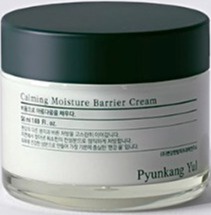
Pyunkang Yul — Calming Moisture Barrier Cream
Storage & shelf life
12 MONTHS12 months after opening. Check the small jar symbol on the packaging for the manufacturer-specified PAO. Some brands also print a manufacture date — keep both in mind.
Store in a cool, dry place away from direct sunlight. Heat and UV degrade many active ingredients. Keep the cap on when not in use.
Standard cosmetic packaging with cap. Re-cap after each use to prevent oxidation of actives.
Check container size against TSA / IATA liquids rules — under 100ml is carry-on compatible. Use a leak-proof travel pouch.
Frequently asked questions
FAQYes. The formula contains no retinoids, hydroquinone, or high-risk actives. Centella asiatica, ceramides, and hyaluronic acid are all pregnancy-safe and commonly recommended by dermatologists for barrier support during hormonal skin changes. Patch-test first if you have a known botanical sensitivity.
Yes. The ceramides and centella asiatica reduce retinoid-induced irritation, making this a smart choice for retinoid-adjusted skin.
Proceed with caution. This formula contains ethylhexyl palmitate, stearic acid, palmitic acid, and oleic acid—all lipids that can feed Malassezia yeast. If you have confirmed fungal acne, patch-test on a small area first, or consider a Malassezia-safe alternative like COSRX Snail Mucin or a lightweight ceramide serum without high-risk oils.
Use a pea-to-almond-sized amount, warming it between your palms and pressing gently into clean, damp skin. Apply once nightly, or twice daily (AM under sunscreen, PM as final step) depending on dryness severity. For combination skin, apply only to dry zones to avoid oiliness on the T-zone.
Yes, but time it carefully. Use your AHA or BHA first, wait until skin is completely dry (10–15 minutes), then apply this cream to lock in hydration and buffer any irritation. This is especially helpful if exfoliants cause dryness or tightness.
Most users notice visible redness reduction within 3–7 days of consistent nightly use, as centella asiatica actives work to calm inflammation. Full barrier strengthening (smoother texture, reduced reactivity) typically takes 4–8 weeks. Results depend on baseline barrier damage; more severe cases may take longer.
Not ideal. The high emollient load (squalane, shea butter, oils) and lack of acne-fighting actives make it a poor fit for oily or acne-prone skin. It's specifically formulated for dry, sensitive, and irritated skin. Oily skin users should skip this or use it sparingly as a targeted night treatment on very dry patches only.
No on all counts. It's paraben-free, sulfate-free, and fragrance-free, using ethylhexylglycerin and hydroxyacetophenone as gentle preservatives. It also contains no silicones, making it suitable for users avoiding those ingredients. However, it does contain tea tree and honeysuckle extracts, which may irritate those with botanical sensitivities.
Verdict: Pyunkang Yul's Calming Moisture Barrier Cream is a Korea-formulated moisturizer built on multi-molecular-weight hyaluronic acid, centella asiatica triterpenes, and a ceramide-lipid complex designed to repair and reinforce a compromised skin barrier. The triple HA stack penetrates across skin layers for immediate and sustained hydration, while madecassoside and madecassic acid visibly calm inflammation and redness within days. Ceramide NP paired with arachidic, palmitic, and oleic acid recreates the skin's natural intercellular lipid architecture, supporting barrier integrity without silicone or mineral oil. The texture is lightweight and spreads smoothly, making it suitable for layering in multi-step routines or as a standalone PM moisturizer. Limitations include a small (~60ml) size that requires frequent repurchasing, high lipid load that may overwhelm oily or acne-prone skin, and potential fungal-acne triggers for Malassezia-sensitive users. This cream is ideal for individuals with dry, sensitive, or irritated skin seeking evidence-backed barrier repair without fragrance, parabens, or silicones—especially those managing post-procedure recovery or chronic inflammation.
Product Overview

 What are Quick Product Notes?
Quick product notes are a great way to check if a product is free from commonly avoided ingredients by skincare enthusiasts. These preferences come about for different reasons depending on the ingredient such as personal experiences, sensitivities, health preferences & etc.
 Pro Tip Alert!
Just because a product is not free from a common preference does not mean it's a bad product! You can make a personal decision whether or not you want to use a product that contains these ingredients or not - click the labels of the preference to read more about them.
Quick Product Notes
 Paraben-Free
Paraben-Free
Paraben-Free
Understanding Parabens
Parabens are a large group of preservatives which are used to prevent bacteria growing in cosmetic formulations. There has been some healthy controversy surrounding them due to a few studies finding paraben presence in breast tumours and breast tissue. However, the majority of the scientific community have deemed these findings non-conclusive due to the limitations of these studies. There's still a lot of support for avoiding parabens following the better safe than sorry route. If you do we completely support you! If you are concerned about the health safety of parabens, then feel free to avoid them by looking out for the Paraben-Free icon. If not, don't worry about it - they do have had one of the longest safety records as preservatives!
Which Ingredients are classified as Paraben?
A product will be paraben-free if it does not contain any of the following parabens:
- Sodium Isobutylparaben
- Sodium Ethylparaben
- Sodium Butylparaben
- Propylparaben
- Isopropylparaben
- Isobutylparaben
- Sodium Propylparaben
- Butylparaben
- Ethylparaben
- Sodium Methylparaben
- Methylparaben
Sulfate-Free
Sulfate-Free
Understanding Sulfates
Sulfates are a large group of ingredients which act as cleansing agents in Cosmetics. They help loosen up the dirt and grime from your skin and hair to allow for water to wash it away with ease. However some sulfates are so good at their job, they can wash off your skin’s own natural oils that keep it moisturised and protected which can lead to dryness and irritation. Most people will find no issues with sulfate, however if you find your skin doesn't like sulfates then free feel to avoid them by looking out for the sulfate-free icon on Skincarisma.
Which ingredients are classified as sulfates?
We've taken the Sulfates which are considered more harsh for our Sulfate-Free status. A product will be Sulfate-Free if it does not contain any of the following Sulfates:
- TEA-Dodecylbenzenesulfonate
- Ammonium Laureth Sulfate
- Sodium Lauryl Sulfate
- PEG-15 Cocamine
- Sodium Laureth Sulfate
- Sodium Cocoyl Sarcosinate
- Sodium C14-16 Olefin Sulfonate
- Dioctyl Sodium Sulfosuccinate
- Ammonium Xylenesulfonate
- Ammonium Lauryl Sulfate
- Sodium Xylenesulfonate
- Sodium Myreth Sulfate
- Sodium Lauryl Sulfoacetate
Alcohol-Free
Alcohol-Free
Understanding Simple Alcohols
Alcohol ingredients are widely used in cosmetics and come in different types. For the most part alcohols are not problematic at all. However one type of alcohols, simple alcohols can be quite drying to the skin because it evaporates very quickly. This can cause irritation which can also lead to other skin complications. These alcohols should never be used alone on your skin, but combined with other cosmetic ingredients, they are normally without issue. However, for some people with sensitive and easily irritable skin, avoiding products with these simple alcohols may be beneficial. If you find your skin doesn't like these simple alcohols, then free feel to avoid them by looking out for the Alcohol-Free icon.
Which Ingredients are classified as Alcohol?
A product will be alcohol-free if it does not contain any of the following alcohol ingredients:
- SD Alcohol
- Alcohol Denat
- Isopropyl Alcohol
- Alcohol
Silicone-Free
Silicone-Free
Understanding Silicones
If you've ever used a skincare, makeup or beauty product that's made your skin look and feel smoother tempoarily - it's likely contained Silicone. They are a popular class of ingredients found in cosmetics due to their smooth, soft, easy-to-spread and smooth properties that help creates an artificial layer/barrier on top of skin or hair (commonly found in conditioners).
For the same reasons they are popularly used, they are also commonly avoided. Anecdotally, many individuals have reported that Silicones cause/excerbate breakouts, irritation, cause a feeling of skin being unable to breathe, cause clumping of cosmetic products and find it difficult to wash off. As a result, those who find them problematic are avoiding them and increasingly, cosmetic companies are avoiding them as well.
If you have had bad experiences with Silicones in the past, or suspect they are problematic then look out for the tick on the Silicone-free label.
Disclaimer
The Silicone-free label only includes the most common Silicone ingredients that have indentified been reported by individuals that could potentially cause issues.
These include: Amodimethicone, Behenoxy Dimethicone, Bis-Aminopropyl Dimethicone, Cetearyl Methicone, Cetyl Dimethicone, Cyclomethicone, Cyclopentasiloxane, Dimethicone, Dimethicone Copolyol, Dimethiconol, Methicone, Phenyl Trimethicone, Phenyl Trimethicone, Stearoxy Dimethicone, Stearyl Dimethicone, Trimethylsilylamodimethicone.
Note, that this does not include all ingredients part of the Silicone class of ingredients.
EU Allergen-Free
EU Allergen-Free
Understanding the Identified Contact Allergens
The EU's Scientific Committee on Consumer Safety (SCCS) has identified and established 26 cosmetic ingredients that are likely contact allergens (potential to cause skin allergies) as demonstrated in clinical or epidemiological studies. The EU's SCCS have recommend cosmetic companies to disclose them on the labels if used and in cases where the concentration exceeds 0.001% in leave-on products and 0.01% in rinse-off products, then they must be labelled.
Look out for the tick on the EU-Allergen free label to know your cosmetic is free from any of the 26 identified cosmetic ingredients.
For more information regarding the EU's Scientific Committee on Consumer Safety, please visit their official website.
Disclaimer
The EU Allergen Free label is for the 26 ingredients identified by the EU SCCS and products will be only flagged if a suspected ingredient is on it's ingredient list. It is possible for cosmetics to contain one of the suspect ingredients without it appearing on the ingredient list due to it not reaching the concentration threshold to disclose it and cosmetic manufacturers choice to not disclose it.
Also note, the EU Allergen Free label is not personalized for your own allergies you may have and it does not constitute as medical advice. For your specific case, always consult your medical professiona such as dermatologist, physician, pharmacist, or health care provider - please read our medical disclaimer for more information.
Fungal Acne (Molassezia) Safe
Fungal Acne (Molassezia) Safe
Understanding Fungal Acne (Pityrosporum Folliculitis/Malassezia Folliculitis)
Pityrosporum Folliculitis/Malassezia folliculitis or simply known as Fungal Acne is a persistent acne-like condition that commonly responds poorly to traditional acne-treating methods. Unlike most cases of Acne where bacteria is the culprit, Fungi is the culprit of Fungal Acne (Hence the name!). There are certain classes & groups of ingredients that have been shown to promote and feed the growth of the Fungal Acne, Fungi such as fatty acids, oils, esters, polysorbates and fermented ingredients.
For more information regarding Fungal Acne, please visit Simple Skincare Science (f.c) - #3 of our Recommend Skincare Resources for an amazing comprehensive guide!
Please Read: How to use the Fungal Acne (Malassezia) Label
At SkinCarisma, we've done our best to identify as many ingredients as possible but note the fungal-free label may not be 100% accurate due to the complexconditions and combination of ingredients that malezzeria can thrive on.
Additionally, products that may contain ingredients that have shown to feed Malassezia may not neccessarily exacerbate the condition due to concentration of ingredient used in the product, this information is simply not available on the products.
As a result, please note this is only an experimental label that can be best used to possible identify problematic products you have used in the past. It is in no way a perfect identifier nor a predictor in whether or not it will exacerbate or cause fungal acne. It will continue to be worked on as more information and research comes to light.
If you find any ingredients you believe should be included, please email us at snails@skincarisma.com.
Disclaimer
Due to the lack of substantial research into this area it is very likely there are other ingredients and class/groups of ingredients that could feed Fungal Acne which have not been indentified.
The Fungal-Safe label does not constitute as medical advice. For your specific case, always consult your medical professiona such as dermatologist, physician, pharmacist, or health care provider - please read our medical disclaimer for more information.
What are Notable Effects & Ingredients?
Ever used a product that promised a certain effect but provided no results? It might not have contained any notable ingredients that could have been responsible for that promised effect. It doesn't matter what the marketing or packaging «promises» it can do, if it doesn't contain anything that can help - then the likelihood of it helping is low.
We help you identify key notable ingredients that have been shown to help with effects such as acne-fighting, brightening, UV-protection, wound healing & anti-aging to help you achieve your skincare goals smarter. Please note that different notable ingredients have varying levels of research behind them, some are extremely well proven yet some have mixed research in their efficacy.
Pro Tip Alert!
Just because a product doesn't contain any notable ingredients doesn't mean it's bad. And a product with notable ingredients (or even many) doesn't necessarily guarantee the efficacy of the product performing these effects either. There are other factors such as ingredient quality, concentration and formulation that will ultimately determine this.
Be smart and use this as just a starting point for you to make more informed and smarter choices and compare it with reviews to see if the product is right for you
Notable Effects & Ingredients
What are Ingredients Related to Skin Type?
Why are some products great for some people and horrible for others? Well everyone has different skin types and different reactions to the same ingredients.
We've identified a range of ingredients that are commonly regarded as potentially good or bad for those with Dry, Oily/Acne-Prone or Sensitive skin.
Pro Tip Alert!
A product that contains good or bad ingredients for your skin type doesn't always flat out make the entire product good or bad for your skin. There are other factors such as ingredient quality, concentration and formulation that will ultimately determine your skins reaction.
One of the best ways to use this section is to troubleshoot products you've had bad experiences with in the past. Check if it contains any of the marked ingredients to point out suspect ingredients to avoid in the future!
Ingredients Related to Skin Types
 Dry Skin
 Oily/Acne-Prone Skin
 Sensitive Skin
What is the Ingredient Safety Breakdown?
Sensitive Skin
What is the Ingredient Safety Breakdown?
Ingredient Safety Breakdown refers to the percentage % of ingredients in different risk categories as classified by EWG (Environment Working Group) if they are available. There are almost endless cosmetic ingredients and they are one of the few organisations globally that have assigned ratings to a lot of the more commonly used ingredients which is why we reference them.
Pro Tip Alert!
EWG is seen by many to be more on the alarmist side in their assignment of health ratings resulting in rating ingredients as riskier than they actually are. We recommend using this a reference point rather than a strict guide of ingredient safety and to always do further research if into ingredients that you may find suspect.