


DR
AGreat

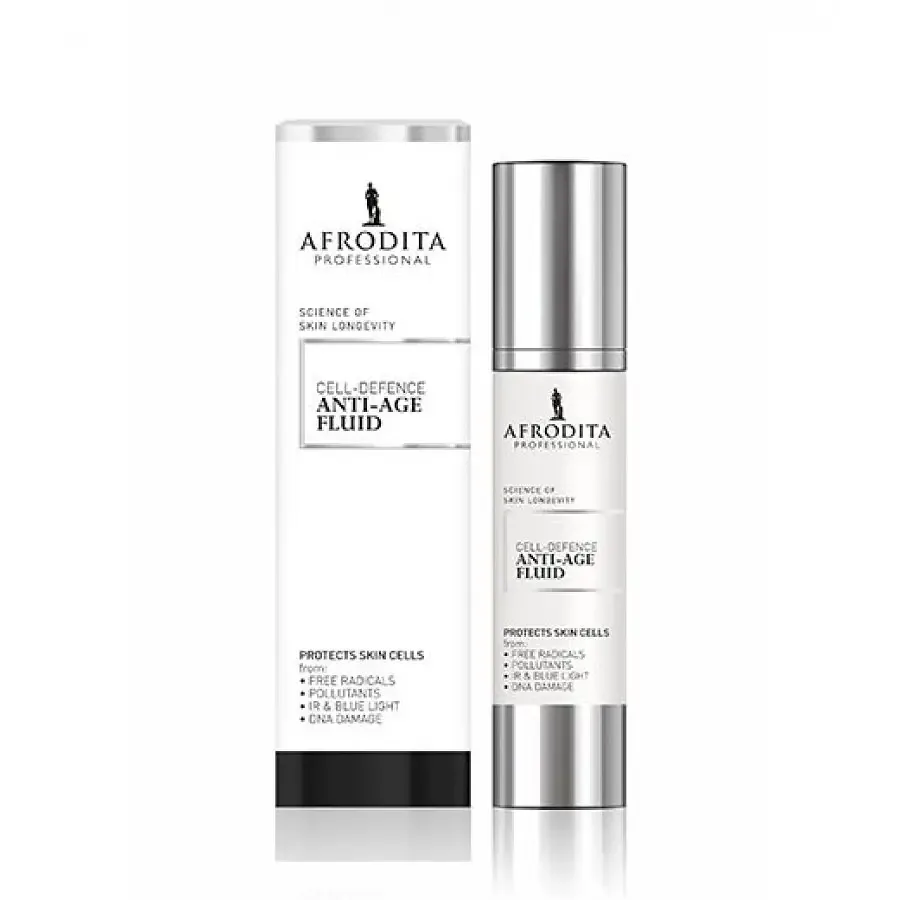
Science Of Skin Longevity Cell-Defence Anti-Age Fluid
The Afrodita Science Of Skin Longevity Cell-Defence Anti-Age Fluid is a emulsion. Our analysis of its 44 ingredients (34 low-risk) rates it Excellent (94/100). Based on its ingredients, it looks well-suited to oily / acne-prone and dry skin. Heads up: it contains fragrance, which can irritate sensitive or reactive skin.
The Afrodita Science Of Skin Longevity Cell-Defence Anti-Age Fluid is a emulsion. Our analysis of its 44 ingredients (34 low-risk) rates it Excellent (94/100). Based on its ingredients, it looks well-suited to oily / acne-prone and dry skin. Heads up: it contains fragrance, which can irritate sensitive or reactive skin.
Summarised from our ingredient analysis — not brand marketing copy.
The evidence
 Dry Skin
16/6
Dry Skin
16/6
 Oily/Acne-Prone Skin
1/0
Oily/Acne-Prone Skin
1/0
 Sensitive Skin
4/19
Sensitive Skin
4/19
| EWG | CIR | Ingredient Name & Cosmetic Functions | Notes |
|---|---|---|---|
 1
1
|

|
Water
(Solvent) |
|
|
1
|
 B
B
|
Cetearyl Ethylhexanoate
(Hair Conditioning, Skin Conditioning, Emollient) |
|
|
1
|
 A
A
|
Pentylene Glycol
(Skin Conditioning, Solvent) |
|
|
3
|
A
|
Cyclopentasiloxane
(Hair Conditioning, Skin Conditioning, Emollient, Solvent) |

Silicone
|
|
1
|
B
|
Potassium Cetyl Phosphate
(Emulsifying, Surfactant) |
|
|
2
|
A
|
Glycerin
(Denaturant, Fragrance, Hair Conditioning, Humectant, Oral Care Agent, Oral Health Care Drug, Skin Protecting, Viscosity Decreasing Agent, Perfuming, Solvent) |

Good for Dry Skin

Fungal Acne Trigger
|
|
1
|
A
|
Stearyl Alcohol
(Emulsion Stabilising, Fragrance, Emulsifying, Surfactant, Foambooster, Viscosity Increasing Agent, Emollient, Foam Boosting, Masking, Opacifying, Refatting, Viscosity Controlling) |
|
|
1
|
A
|
Cetyl Alcohol
(Emulsion Stabilising, Fragrance, Opacifying, Emulsifying, Surfactant, Foam Boosting, Viscosity Increasing Agent, Emollient, Masking, Viscosity Controlling) |
|
|
1
|
B
|
Glyceryl Stearate Citrate
(Skin Conditioning, Emollient, Emulsifying) |
Fungal Acne Trigger
|
|
1
|
A
|
Triisononanoin
(Viscosity Increasing Agent, Emollient, Skin Conditioning, Solvent, Viscosity Controlling) |
|
|
1
|
A
|
Maltitol
(Flavoring Agent, Humectant, Masking, Moisturising, Skin Conditioning) |
|
|
1
|
A
|
Dipropylene Glycol
(Fragrance, Solvent, Viscosity Decreasing Agent, Masking, Viscosity Controlling) |
|
|
1
|
A
|
Butylene Glycol
(Fragrance, Skin Conditioning, Solvent, Viscositydecreasing Agent, Humectant, Masking, Viscosity Controlling) |
Good for Dry Skin
|
|
2
|
A
|
Hydrogenated Lecithin
(Skin Conditioning, Emulsifying, Surfactant, Suspending Agent Nonsurfactant) |
|
|
3
|
|
Tocopheryl Acetate
(Antioxidant, Skin Conditioning) |

Bad for Oily Skin
|
|
1
|
A
|
Cholesterol
(Emulsion Stabilising, Skin Conditioning, Viscosity Increasing Agent, Emollient, Emulsifying, Stabilising, Viscosity Controlling) |
|

|
|
TOCOPHEROL
(Antioxidant, Fragrance, Skin Conditioning) |
|
|
1
|
A
|
Serine
(Fragrance, Hair Conditioning, Skin Conditioning, Antistatic Agent, Masking) |
|
|
1
|
A
|
Alanine
(Fragrance, Hair Conditioning, Skin Conditioning, Antistatic Agent, Masking) |
|
|
1
|
A
|
Beta-Glucan
(Bulking Agent, Skin Conditioning) |
|
|
1
|
A
|
1,2-Hexanediol
(Solvent) |
|
|
1
|
A
|
Caprylyl Glycol
(Hair Conditioning, Skin Conditioning, Emollient, Humectant) |
|
|
|
|
HAMAMELIS VIRGINIANA LEAF EXTRACT
(Skin Conditioning) |
|
|
1
|
|
Ginkgo Biloba Leaf Extract
(Skin Conditioning) |
|
|
|
|
SIMMONDSIA CHINENSIS SEED OIL
(Hair Conditioning, Skin Conditioning, Skin Conditioning Emollient) |
|
|
1
|
|
Pelargonium Graveolens Flower Oil
(Masking) |
|
|
1
|
A
|
Sodium Ascorbyl Phosphate
(Antioxidant) |
|
|
1
|
|
Carnosine
(Skin Conditioning) |
|
|
|
|
Bisabolol
(Fragrance, Skin Conditioning, Soothing) |
|
|
1
|
A
|
Caprylic/Capric Triglyceride
(Emollient, Masking, Perfuming, Skin Conditioning, Solvent) |
|
|
1
|
A
|
Xanthan Gum
(Binding Agent, Emulsion Stabilising, Skin Conditioning, Surfactant Emulsifying Agent, Viscosity Increasing Agent, Binding, Gel Forming, Viscosity Controlling) |
|
|
3
|
B
|
Propylene Glycol
(Fragrance, Humectant, Skin Conditioningagent Miscellaneous, Solvent, Viscosity Decreasing Agent, Skin Conditioning, Viscosity Controlling) |
Good for Dry Skin
|
|
|
|
PARFUM
(Fragrance, Perfuming) |
|
|
3
|
A
|
Dimethicone
(Antifoaming Agent, Skin Protecting, Emollient, Skin Conditioning) |
Silicone
|
|
1
|
A
|
Glucose
(Flavoring Agent, Humectant, Skin Conditioning Agent Miscellaneous) |
|
|
2
|
A
|
Citric Acid
(Chelating Agent, Fragrance, Ph Adjuster, Buffering Agent, Masking) |

Bad for Sensitive Skin
|
 4
4
|
B
|
Lactic Acid
(Exfoliant, Fragrance, Humectant, Ph Adjuster, Skin Conditioning Agent Humectant, Skin Conditioning, Buffering Agent) |
Bad for Sensitive Skin
|
|
1
|
A
|
Disodium EDTA
(Chelating Agent, Viscosity Controlling) |
|
|
3
|
A
|
Sodium Benzoate
(Fragrance, Preservative, Anticorrosive, Masking) |
|
|
3
|
A
|
Potassium Sorbate
(Fragrance, Preservative) |
|
|
5
|
|
Citronellol
(Fragrance, Masking) |

Allergens
|
 7
7
|
|
Geraniol
(Fragrance, Masking, Tonic) |
Allergens
|
|
5
|
|
Linalool
(Fragrance, Deodorant, Masking) |
Allergens
|
|
6
|
|
Limonene
(Deodorant, Perfuming, Solvent) |
Allergens
|
No personal ingredient notes yet. Save ingredients to your profile to get good/bad alerts here.
EWG flags hazard, not real-world risk — ratings don't account for how much of an ingredient a product contains. Treat these as things to research, not verdicts. How we score →
How to use
General guidance from this product's category and active ingredients — always follow the directions on the package.
Trust & honesty
The concentrations these actives are typically effective at in research — not a measurement of this product.
L-ascorbic acid is usually used at 5–20% (around 10–15% is common). Above ~20% adds little and tends to irritate more; it also needs a low pH to work.
Sodium Ascorbyl Phosphate
OTC leave-on AHAs are usually 5–10%. The effect also depends on pH and free-acid value, not the percentage alone.
Lactic Acid
INCI lists don't disclose amounts, and we don't claim to know this product's levels — these are the ranges these ingredients are usually effective at, so you can tell a real formula from "fairy-dusting" a marketed active. How we estimate this.
From the community
Used this product? Rate it in 10 seconds
Alternatives