

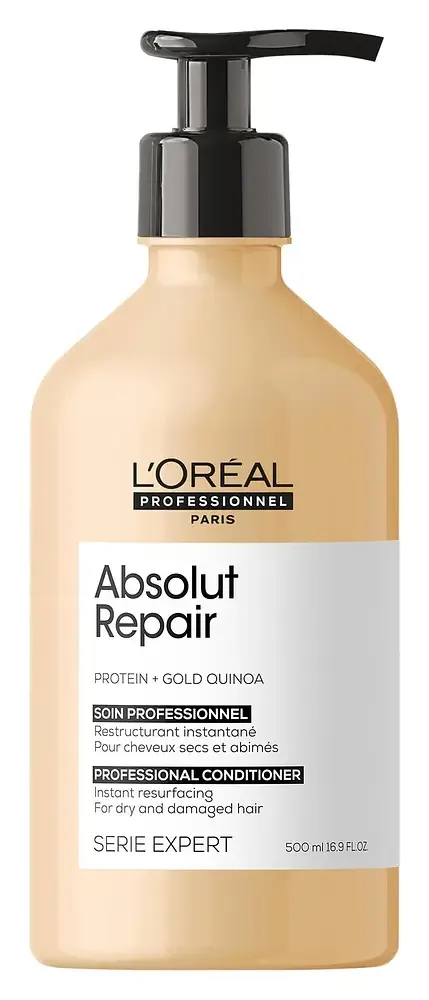
Absolut Repair Conditioner for Damaged Hair

L'Oréal Professionnel

Absolut Repair Conditioner for Damaged Hair

0.0
from 0 Ratings
Where to buy Possibly in stock

About this product

The L'Oréal Professionnel Absolut Repair Conditioner for Damaged Hair is a misc. Our analysis of its 26 ingredients (19 low-risk) rates it Excellent (91/100). Heads up: it contains fragrance, which can irritate sensitive or reactive skin.

Vegan-friendly Reef-safe

Summarised from our ingredient analysis — not brand marketing copy.

At a glance

Type
Misc
Ingredients
26
Low-risk
19
Fragrance
Contains fragrance
Origin
France

The evidence

Quick Product Notes

Paraben-Free Sulfate-Free Alcohol-Free Silicone-Free EU Allergen-Free Fungal Acne (Malassezia) Safe

Notable Effects & Ingredients

No Notable Effects & Ingredients

Ingredients Related to Skin Types

Good   Bad — tap a skin type to see which ingredients · estimated from ingredient functions
Dry Skin 3/6
Good for dry skin
Cetearyl Alcohol Cetyl Esters Dimethicone
Caution for dry skin
Trideceth-10 Trideceth-3 Dicetyldimonium Chloride Cetrimonium Chloride PEG-100 Stearate Steareth-6
Oily/Acne-Prone Skin No data
Sensitive Skin 1/8
Good for sensitive skin
Dimethicone
Caution for sensitive skin
Acetic Acid Tartaric Acid Isopropyl Alcohol Sodium Benzoate Phenoxyethanol Linalool Hexyl Cinnamal Limonene

Ingredients list

26 total
Lower hazard (1) Higher hazard (6)
All26 Fragrance8 Skin Conditioning7 Emulsifying6 Surfactant6 Masking5 Antistatic Agent4 Preservative4 Solvent3
EWG CIR Ingredient Name & Cosmetic Functions Notes
1
Water
(Solvent)
1
A
Cetearyl Alcohol
(Emulsion Stabilising, Opacifying, Foam Boosting, Viscosity Increasingagent Aqueous, Viscosity Increasing Agent, Emollient, Emulsifying, Viscosity Controlling)
2
Dicetyldimonium Chloride
(Antistatic Agent, Emulsifying, Hair Conditioning, Surfactant)
3
B
Cetrimonium Chloride
(Antistatic Agent, Cosmetic Biocide, Emulsifying, Surfactant, Antimicrobial, Preservative)
3
A
Dimethicone
(Antifoaming Agent, Skin Protecting, Emollient, Skin Conditioning)
Silicone
Silicone
1
B
Cetyl Esters
(Skin Conditioning, Emollient)
3
A
Sodium Benzoate
(Fragrance, Preservative, Anticorrosive, Masking)
2
A
Isopropyl Alcohol
(Antifoaming Agent, Fragrance, Solvent, Viscosity Decreasing Agent, Perfuming, Viscosity Controlling)
Bad for Sensitive Skin
1
A
Amodimethicone
(Antistatic Agent, Hair Conditioning)
Silicone
Silicone
5
Linalool
(Fragrance, Deodorant, Masking)
Allergens
Allergens
1
B
Trideceth-10
(Emulsifying, Surfactant)
1
Tartaric Acid
(Fragrance, Ph Adjuster, Buffering Agent, Masking)
Bad for Sensitive Skin
5
Hexyl Cinnamal
(Fragrance, Masking)
Allergens
Allergens
4
B
Chlorhexidine Digluconate
(Cosmetic Biocide, Oral Care Agent, Preservative, Antimicrobial)
6
Limonene
(Deodorant, Perfuming, Solvent)
Allergens
Allergens
3
A
PEG-100 Stearate
(Surfactant)
Fungal Acne
Fungal Acne Trigger
4
A
Phenoxyethanol
(Fragrance, Preservative)
Paraben
Paraben
Steareth-6
(Emulsifying, Surfactant)
1
B
Trideceth-3
(Emulsifying, Surfactant)
1
Chenopodium Quinoa Seed Extract
(Skin Conditioning)
3
CI 19140
(Colorant, Cosmetic Colorant)
1
A
Acetic Acid
(Fragrance, Ph Adjuster, Buffering Agent, Masking)
1
Hydroxypropyltrimonium Hydrolyzed Wheat Protein
(Antistatic Agent, Hair Conditioning, Skin Conditioning)
1
A
Trisodium HEDTA
(Chelating Agent)
2
CI 17200
(Cosmetic Colorant)
PARFUM
(Fragrance, Perfuming)

My Ingredient Notes

No personal ingredient notes yet. Save ingredients to your profile to get good/bad alerts here.

Find dupes (8)
Discover better-value matches with a similar formula

Key ingredients

Cetearyl Alcohol
Emollient
Dimethicone
Skin Protecting, Emollient
Cetyl Esters
Skin Conditioning, Emollient
Chenopodium Quinoa Seed Extract
Skin Conditioning
Hydroxypropyltrimonium Hydrolyzed Wheat Protein
Skin Conditioning

Benefits

HydratingBoosts hydration and relieves dry, tight skin.
Scar HealingImproves the look of marks and scars.

Concerns

Contains paraben
Contains silicone
Contains eu allergen
Not fungal acne (malassezia) safe
May not suit dry skin
May not suit sensitive skin

Ingredients explained

Water
Solvent
Low-hazard ingredient.Read moreShow less
EWG 1 Solvent
Cetearyl Alcohol
Emulsion stabilising, Opacifying
Low-hazard ingredient.Read moreShow less
EWG 1 CIR A Emulsion stabilisingOpacifyingFoam boostingViscosity increasingagent - aqueousViscosity increasing agentEmollientEmulsifyingViscosity controlling
Dicetyldimonium Chloride
Antistatic agent, Emulsifying
Low-hazard ingredient.Read moreShow less
EWG 2 Antistatic agentEmulsifyingHair conditioningSurfactant
Cetrimonium Chloride
Antistatic agent, Cosmetic biocide
Low-to-moderate hazard.Read moreShow less
EWG 3 CIR B Antistatic agentCosmetic biocideEmulsifyingSurfactantAntimicrobialPreservative
Cetyl Esters
Skin conditioning, Emollient
Low-hazard ingredient.Read moreShow less
EWG 1 CIR B Skin conditioningEmollient
Sodium Benzoate
Fragrance, Preservative
Low-to-moderate hazard.Read moreShow less
EWG 3 CIR A FragrancePreservativeAnticorrosiveMasking
Trideceth-10
Emulsifying, Surfactant
Low-hazard ingredient.Read moreShow less
EWG 1 CIR B EmulsifyingSurfactant
Chlorhexidine Digluconate
Cosmetic biocide, Oral care agent
Low-to-moderate hazard.Read moreShow less
EWG 4 CIR B Cosmetic biocideOral care agentPreservativeAntimicrobial
Steareth-6
Emulsifying, Surfactant
Limited public safety data.Read moreShow less
EWG N/A EmulsifyingSurfactant
Trideceth-3
Emulsifying, Surfactant
Low-hazard ingredient.Read moreShow less
EWG 1 CIR B EmulsifyingSurfactant
Chenopodium Quinoa Seed Extract
Skin conditioning
Low-hazard ingredient.Read moreShow less
EWG 1 Skin conditioning
CI 19140
Colorant, Cosmetic colorant
Low-to-moderate hazard.Read moreShow less
EWG 3 ColorantCosmetic colorant
Acetic Acid
Fragrance, Ph adjuster
Low-hazard ingredient.Read moreShow less
EWG 1 CIR A FragrancePh adjusterBuffering agentMasking
Hydroxypropyltrimonium Hydrolyzed Wheat Protein
Antistatic agent, Hair conditioning
Low-hazard ingredient.Read moreShow less
EWG 1 Antistatic agentHair conditioningSkin conditioning
Trisodium HEDTA
Chelating agent
Low-hazard ingredient.Read moreShow less
EWG 1 CIR A Chelating agent
+ 2 more — see the full ingredients list above
Dimethicone
Antifoaming agent, Skin protecting
Low-to-moderate hazard.Read moreShow less
EWG 3 CIR A Antifoaming agentSkin protectingEmollientSkin conditioning Silicone
Isopropyl Alcohol
Antifoaming agent, Fragrance
Low-hazard ingredient.Read moreShow less
EWG 2 CIR A Antifoaming agentFragranceSolventViscosity decreasing agentPerfumingViscosity controlling Bad for Sensitive Skin
Amodimethicone
Antistatic agent, Hair conditioning
Low-hazard ingredient.Read moreShow less
EWG 1 CIR A Antistatic agentHair conditioning Silicone
Linalool
Fragrance, Deodorant
Moderate-hazard ingredient.Read moreShow less
EWG 5 FragranceDeodorantMasking Allergens
Tartaric Acid
Fragrance, Ph adjuster
Skin irritation can occur at high concentrationRead moreShow less
EWG 1 FragrancePh adjusterBuffering agentMasking Bad for Sensitive Skin
Hexyl Cinnamal
Fragrance, Masking
Moderate-hazard ingredient.Read moreShow less
EWG 5 FragranceMasking Allergens
Limonene
Deodorant, Perfuming
Moderate-hazard ingredient.Read moreShow less
EWG 6 DeodorantPerfumingSolvent Allergens
PEG-100 Stearate
Surfactant
Low-to-moderate hazard.Read moreShow less
EWG 3 CIR A Surfactant Fungal-acne trigger
Phenoxyethanol
Fragrance, Preservative
Low-to-moderate hazard.Read moreShow less
EWG 4 CIR A FragrancePreservative Paraben

How to use

How to use

  • 1 Evening, start slow: Best in the PM a few times a week to begin with; avoid layering with other strong actives the same night.
  • 2 Wear SPF the next day: Acids and retinoids increase sun sensitivity — daily sunscreen is a must while using this.

General guidance from this product's category and active ingredients — always follow the directions on the package.

Trust & honesty

Effective levels — general guide

The concentrations these actives are typically effective at in research — not a measurement of this product.

AHA (acid exfoliant) 5–10% (OTC)

OTC leave-on AHAs are usually 5–10%. The effect also depends on pH and free-acid value, not the percentage alone.

Tartaric Acid

INCI lists don't disclose amounts, and we don't claim to know this product's levels — these are the ranges these ingredients are usually effective at, so you can tell a real formula from "fairy-dusting" a marketed active. How we estimate this.

From the community

0
Reviews
0
Saved by users
0
In collections

Ratings & reviews

Write a Review
0.0
from 0 ratings

Used this product? Rate it in 10 seconds

Alternatives