


AC
AGreat

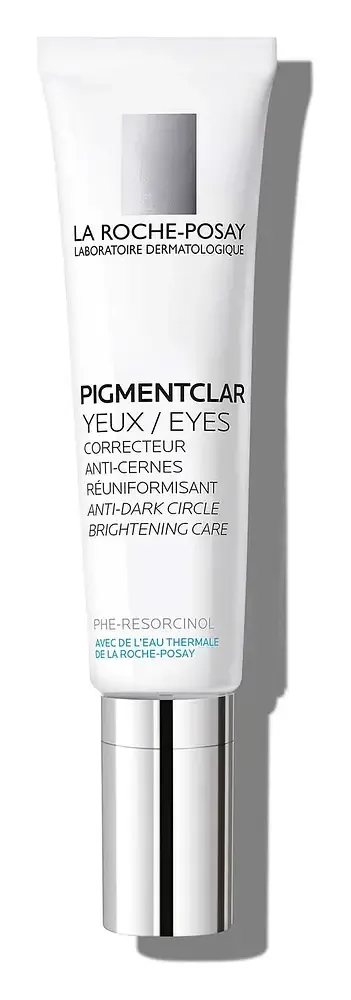
La Roche-Posay Pigmentclar Eyes Dark Circle Skin-Evening Corrector
The La Roche-Posay Pigmentclar Eyes Dark Circle Skin-Evening Corrector is a misc. Our analysis of its 34 ingredients (33 low-risk) rates it Excellent (99/100). Based on its ingredients, it looks well-suited to dry skin.
The La Roche-Posay Pigmentclar Eyes Dark Circle Skin-Evening Corrector is a misc. Our analysis of its 34 ingredients (33 low-risk) rates it Excellent (99/100). Based on its ingredients, it looks well-suited to dry skin.
Summarised from our ingredient analysis — not brand marketing copy.
The evidence
 Dry Skin
11/9
Dry Skin
11/9
 Oily/Acne-Prone Skin
No data
Oily/Acne-Prone Skin
No data
 Sensitive Skin
5/7
Sensitive Skin
5/7
| EWG | CIR | Ingredient Name & Cosmetic Functions | Notes |
|---|---|---|---|
 1
1
|

|
Water
(Solvent) |
|
|
2
|
 A
A
|
Glycerin
(Denaturant, Fragrance, Hair Conditioning, Humectant, Oral Care Agent, Oral Health Care Drug, Skin Protecting, Viscosity Decreasing Agent, Perfuming, Solvent) |

Good for Dry Skin

Fungal Acne Trigger
|
|
1
|
A
|
Butylene Glycol
(Fragrance, Skin Conditioning, Solvent, Viscositydecreasing Agent, Humectant, Masking, Viscosity Controlling) |
Good for Dry Skin
|
|
3
|
A
|
Dimethicone
(Antifoaming Agent, Skin Protecting, Emollient, Skin Conditioning) |

Silicone
|
|
1
|
A
|
Niacinamide
(Hair Conditioning, Skin Conditioning, Smoothing) |
|
|
1
|
 B
B
|
Isopropyl Palmitate
(Binding Agent, Fragrance, Skin Conditioning, Emollient, Antistatic Agent, Binding, Perfuming, Solvent) |

Bad for Oily Skin
Fungal Acne Trigger
|
|
1
|
A
|
Cetearyl Alcohol
(Emulsion Stabilising, Opacifying, Foam Boosting, Viscosity Increasingagent Aqueous, Viscosity Increasing Agent, Emollient, Emulsifying, Viscosity Controlling) |
|
|
1
|
|
Ammonium Polyacryloyldimethyl Taurate
(Emulsion Stabilising, Viscosity Increasing Agent, Viscosity Controlling) |
|
|
1
|
A
|
Butyrospermum Parkii (Shea) Butter |
Bad for Oily Skin
Fungal Acne Trigger
|
|
3
|
A
|
PEG-100 Stearate
(Surfactant) |
Fungal Acne Trigger
|
|
3
|
|
PEG/PPG/Polybutylene Glycol-8/5/3 Glycerin
(Humectant) |
|
|
1
|
A
|
Stearic Acid
(Fragrance, Sufactant, Emulsifying, Surfactantsurfactant Cleansing Agent Is Included As A Function For The Soap Form Of Stearic Acid., Emulsion Stabilising, Masking, Refatting) |
Bad for Oily Skin
Fungal Acne Trigger
|
|
1
|
A
|
Glyceryl Stearate
(Emollient, Emulsifying) |
Fungal Acne Trigger
|
|
1
|
A
|
Dimethicone/Vinyl Dimethicone Crosspolymer
(Viscosity Controlling) |
|
|
1
|
A
|
Dimethiconol
(Antifoaming Agent, Skin Conditioning, Emollient, Moisturising) |
Silicone
|
|
1
|
|
Caffeine
(Fragrance, Skin Conditioning, Masking) |
|
|
3
|
B
|
Sodium Hydroxide
(Denaturant, Ph Adjuster, Buffering Agent) |
|
|
1
2
|
A
|
Silica
(Abrasive, Absorbent, Anticaking Agent, Bulking Agent, Opacifying, Viscosity Controlling) |
|
|
1
|
|
Ginkgo Biloba Leaf Extract
(Skin Conditioning) |
|
|
1
|
A
|
Palmitic Acid
(Fragrance, Opacifying, Sufactant, Surfactant Emulsifying Agentsurfactant Cleansing Agent Is Included As A Function For The Soap Form Of Palmitic Acid., Emollient) |
Bad for Oily Skin
Fungal Acne Trigger
|
|
2
|
A
|
Alumina
(Abrasive, Absorbent, Anticaking Agent, Bulking Agent, Opacifying, Viscosity Controlling) |
|
|
1
|
|
Phenylethyl Resorcinol
(Antioxidant) |
|
|
1
|
|
Ascorbyl Glucoside
(Antioxidant) |
|
|
2
|
A
|
Poloxamer 338
(Emulsifying, Surfactant) |
|
|
1
|
A
|
Disodium EDTA
(Chelating Agent, Viscosity Controlling) |
|
|
1
|
|
Isopropyl Titanium Triisostearate
(Surface Modifier, Emollient, Emulsifying) |
|
|
1
|
A
|
Hydrolyzed Rice Protein
(Hair Conditioning, Skin Conditioning, Antistatic Agent) |
|
|
1
|
A
|
Caprylyl Glycol
(Hair Conditioning, Skin Conditioning, Emollient, Humectant) |
|
|
1
|
A
|
Xanthan Gum
(Binding Agent, Emulsion Stabilising, Skin Conditioning, Surfactant Emulsifying Agent, Viscosity Increasing Agent, Binding, Gel Forming, Viscosity Controlling) |
|
|
2
|
|
Ferulic Acid
(Antioxidant, Preservative, Uv Absorber, Antimicrobial) |
|
 4
4
|
A
|
Phenoxyethanol
(Fragrance, Preservative) |

Paraben
|
|
2
|
|
Iron Oxides
(Colorant, Cosmetic Colorant) |
|
|
1
3
|
|
Titanium/Titanium Dioxide
(Cosmetic Colorant, Opacifying) |
|
|
2
|
|
Mica
(Cosmetic Colorant, Opacifying) |
No personal ingredient notes yet. Save ingredients to your profile to get good/bad alerts here.
How to use
General guidance from this product's category and active ingredients — always follow the directions on the package.
Trust & honesty
The concentrations these actives are typically effective at in research — not a measurement of this product.
L-ascorbic acid is usually used at 5–20% (around 10–15% is common). Above ~20% adds little and tends to irritate more; it also needs a low pH to work.
Ascorbyl Glucoside
Most research uses 2–5%; some formulas go to 10%. Very high levels can cause flushing in sensitive skin.
Niacinamide
INCI lists don't disclose amounts, and we don't claim to know this product's levels — these are the ranges these ingredients are usually effective at, so you can tell a real formula from "fairy-dusting" a marketed active. How we estimate this.
From the community
Used this product? Rate it in 10 seconds
Alternatives