

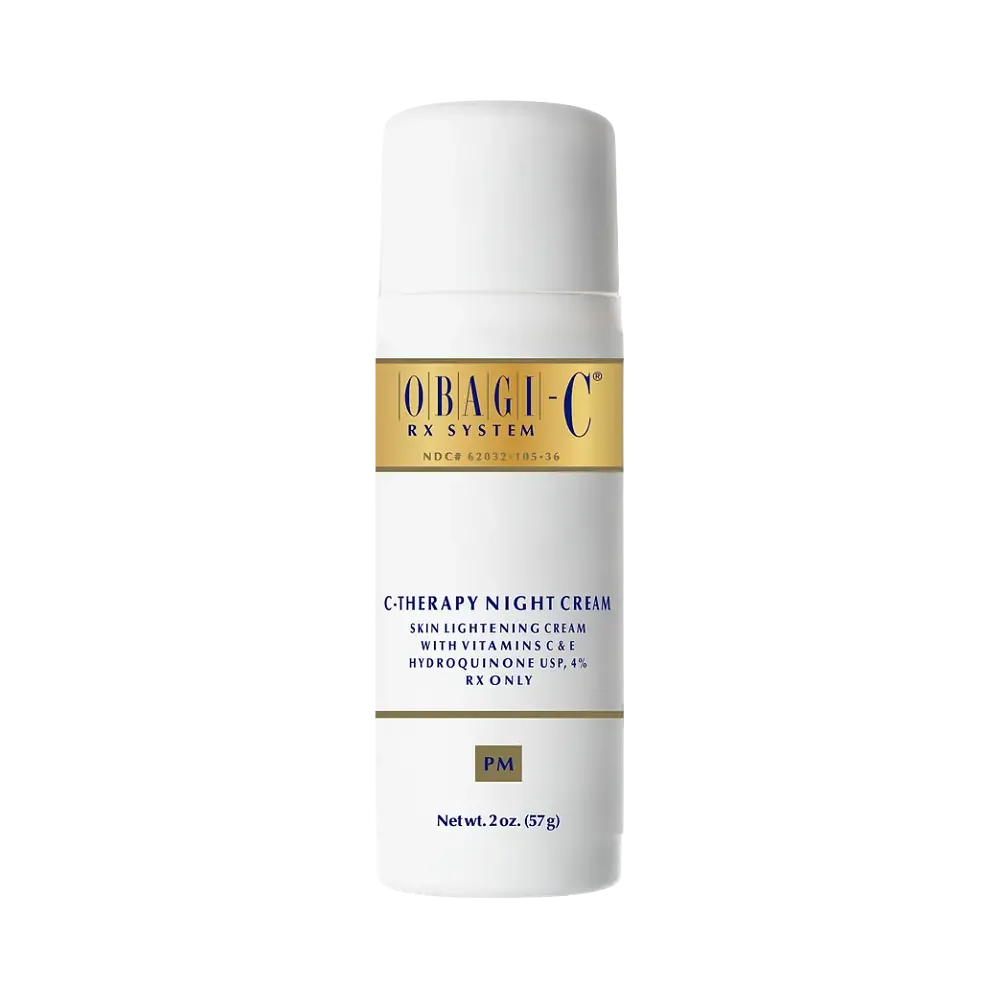
Obagi C-Therapy Night Cream

Obagi

Where to buy Possibly in stock

About this product

The Obagi C-Therapy Night Cream is a moisturizer. Our analysis of its 17 ingredients (11 low-risk) rates it Great (78/100). Based on its ingredients, it looks well-suited to oily / acne-prone and dry skin.

Vegan-friendly Reef-safe

Summarised from our ingredient analysis — not brand marketing copy.

At a glance

Type
Moisturizers
Ingredients
17
Low-risk
11
Fragrance
Fragrance-free
Origin
United States

The evidence

Quick Product Notes

Paraben-Free Sulfate-Free Alcohol-Free Silicone-Free EU Allergen-Free Fungal Acne (Malassezia) Safe Cruelty-Free

Notable Effects & Ingredients

No Notable Effects & Ingredients

Ingredients Related to Skin Types

Good   Bad — tap a skin type to see which ingredients · estimated from ingredient functions
Dry Skin 4/4
Good for dry skin
Cetyl Alcohol Glycerin PPG-2 Myristyl Ether Propionate Lactic Acid
Caution for dry skin
Saponins Cetyl Alcohol Glycerin Sodium Lauryl Sulfate
Oily/Acne-Prone Skin 1/0
Good for oily/acne-prone skin
Ascorbic Acid (Vitamin C)
Sensitive Skin 6/8
Good for sensitive skin
Glycerin Ascorbic Acid (Vitamin C) Tocopheryl Acetate Sodium Metabisulfite BHT Hydroquinone
Caution for sensitive skin
Cetyl Alcohol Glycerin Ascorbic Acid (Vitamin C) Lactic Acid Methylparaben BHT Propylparaben Hydroquinone

Ingredients list

17 total
Lower hazard (1) Higher hazard (9)
All17 Skin Conditioning9 Fragrance8 Antioxidant5 Preservative4 Masking3 Surfactant3 Emulsifying3 Humectant3
EWG CIR Ingredient Name & Cosmetic Functions Notes
9
Hydroquinone
(Antioxidant, Fragrance, Hair Dyeing Reducing, Skin Bleaching Agent, Hair Dyeing)
1
Water
(Solvent)
2
A
Glycerin
(Denaturant, Fragrance, Hair Conditioning, Humectant, Oral Care Agent, Oral Health Care Drug, Skin Protecting, Viscosity Decreasing Agent, Perfuming, Solvent)
Good for Dry Skin
Good for Dry Skin
Fungal Acne
Fungal Acne Trigger
1
A
Cetyl Alcohol
(Emulsion Stabilising, Fragrance, Opacifying, Emulsifying, Surfactant, Foam Boosting, Viscosity Increasing Agent, Emollient, Masking, Viscosity Controlling)
1
PPG-2 Myristyl Ether Propionate
(Skin Conditioning, Emollient)
3
Tocopheryl Acetate
(Antioxidant, Skin Conditioning)
Bad for Oily Skin
Bad for Oily Skin
1
2
Sodium Lauryl Sulfate
(Cleansing, Denaturant, Emulsifying, Foaming, Surfactant)
Bad for Oily Skin
Bad for Oily Skin
Sulfate
Sulfate
1
A
Ascorbic Acid (Vitamin C)
(Antioxidant, Fragrance, Ph Adjuster, Skin Conditioning, Buffering Agent, Masking)
Good for Dry Skin
Good for Dry Skin
2
B
TEA-Salicylate
(Preservative, Uv Absorber)
4
B
Lactic Acid
(Exfoliant, Fragrance, Humectant, Ph Adjuster, Skin Conditioning Agent Humectant, Skin Conditioning, Buffering Agent)
Bad for Sensitive Skin
1
Saponins
(Cleansing, Emulsifying, Surfactant)
4
A
Methylparaben
(Fragrance, Preservative)
Paraben
Paraben
1
A
Disodium EDTA
(Chelating Agent, Viscosity Controlling)
7
A
Propylparaben
(Fragrance, Preservative, Perfuming)
Paraben
Paraben
6
A
BHT
(Antioxidant, Fragrance, Masking)
1
A
Phenyl Trimethicone
(Antifoaming Agent, Hair Conditioning, Skin Conditioning)
Silicone
Silicone
4
A
Sodium Metabisulfite
(Antioxidant, Preservative, Reducing)

My Ingredient Notes

No personal ingredient notes yet. Save ingredients to your profile to get good/bad alerts here.

Browse similar moisturizer
No close formula match yet — browse other products like this

Key ingredients

Hydroquinone
Antioxidant
Glycerin
Humectant, Skin Protecting
Cetyl Alcohol
Emollient
PPG-2 Myristyl Ether Propionate
Skin Conditioning, Emollient
Tocopheryl Acetate
Antioxidant, Skin Conditioning
Ascorbic Acid (Vitamin C)
Antioxidant, Skin Conditioning

Benefits

Good for oily/acne-prone skin

Concerns

Contains paraben
Contains sulfate
Contains silicone
Not fungal acne (malassezia) safe
Hydroquinone — higher EWG
Propylparaben — higher EWG
May not suit sensitive skin

EWG flags hazard, not real-world risk — ratings don't account for how much of an ingredient a product contains. Treat these as things to research, not verdicts. How we score →

Ingredients explained

Water
Solvent
Low-hazard ingredient.Read moreShow less
EWG 1 Solvent
Cetyl Alcohol
Emulsion stabilising, Fragrance
Low-hazard ingredient.Read moreShow less
EWG 1 CIR A Emulsion stabilisingFragranceOpacifyingEmulsifyingSurfactantFoam boostingViscosity increasing agentEmollientMaskingViscosity controlling
PPG-2 Myristyl Ether Propionate
Skin conditioning, Emollient
Low-hazard ingredient.Read moreShow less
EWG 1 Skin conditioningEmollient
TEA-Salicylate
Preservative, Uv absorber
Low-hazard ingredient.Read moreShow less
EWG 2 CIR B PreservativeUv absorber
Saponins
Cleansing, Emulsifying
Low-hazard ingredient.Read moreShow less
EWG 1 CleansingEmulsifyingSurfactant
Disodium EDTA
Chelating agent, Viscosity controlling
Low-hazard ingredient.Read moreShow less
EWG 1 CIR A Chelating agentViscosity controlling
Sodium Metabisulfite
Antioxidant, Preservative
Low-to-moderate hazard.Read moreShow less
EWG 4 CIR A AntioxidantPreservativeReducing
Hydroquinone
Antioxidant, Fragrance
Higher-hazard ingredient.Read moreShow less
EWG 9 AntioxidantFragranceHair dyeing reducingSkin bleaching agentHair dyeing
Glycerin
Denaturant, Fragrance
Low-hazard ingredient.Read moreShow less
EWG 2 CIR A DenaturantFragranceHair conditioningHumectantOral care agentOral health care drugSkin protectingViscosity decreasing agentPerfumingSolvent Good for Dry SkinFungal-acne trigger
Tocopheryl Acetate
Antioxidant, Skin conditioning
Potentially comedogenic - can block poresRead moreShow less
EWG 3 AntioxidantSkin conditioning Bad for Oily Skin
Sodium Lauryl Sulfate
Cleansing, Denaturant
Potentially comedogenic - can block poresRead moreShow less
EWG 1–2 CleansingDenaturantEmulsifyingFoamingSurfactant Bad for Oily SkinSulfate
Ascorbic Acid (Vitamin C)
Antioxidant, Fragrance
Low-hazard ingredient.Read moreShow less
EWG 1 CIR A AntioxidantFragrancePh adjusterSkin conditioningBuffering agentMasking Good for Dry Skin
Lactic Acid
Exfoliant, Fragrance
Skin irritation can occur at high concentrationRead moreShow less
EWG 4 CIR B ExfoliantFragranceHumectantPh adjusterSkin-conditioning agent -humectantSkin conditioningBuffering agent Bad for Sensitive Skin
Methylparaben
Fragrance, Preservative
Low-to-moderate hazard.Read moreShow less
EWG 4 CIR A FragrancePreservative Paraben
Propylparaben
Fragrance, Preservative
Higher-hazard ingredient.Read moreShow less
EWG 7 CIR A FragrancePreservativePerfuming Paraben
BHT
Antioxidant, Fragrance
Moderate-hazard ingredient.Read moreShow less
EWG 6 CIR A AntioxidantFragranceMasking
Phenyl Trimethicone
Antifoaming agent, Hair conditioning
Low-hazard ingredient.Read moreShow less
EWG 1 CIR A Antifoaming agentHair conditioningSkin conditioning Silicone

How to use

How to use

  • 1 Where it fits: Apply near the end of your routine, after thinner serums.
  • 2 Morning only: Apply as the last step of your AM routine, after moisturiser, and reapply every ~2 hours of sun exposure.
  • 3 Wear SPF the next day: Acids and retinoids increase sun sensitivity — daily sunscreen is a must while using this.

General guidance from this product's category and active ingredients — always follow the directions on the package.

Trust & honesty

Pregnancy & breastfeeding

Contains ingredients some choose to avoid or double-check while pregnant or nursing.

Often avoided
Hydroquinone (Hydroquinone)

Commonly advised to avoid in pregnancy because a relatively high proportion is absorbed through the skin.

This is general information, not medical advice. Pregnancy guidance varies and depends on concentration and your individual situation — always check with your doctor, midwife or pharmacist. How we flag this.

Effective levels — general guide

The concentrations these actives are typically effective at in research — not a measurement of this product.

Vitamin C (ascorbic) 5–20%

L-ascorbic acid is usually used at 5–20% (around 10–15% is common). Above ~20% adds little and tends to irritate more; it also needs a low pH to work.

Ascorbic Acid (Vitamin C)

AHA (acid exfoliant) 5–10% (OTC)

OTC leave-on AHAs are usually 5–10%. The effect also depends on pH and free-acid value, not the percentage alone.

Lactic Acid

INCI lists don't disclose amounts, and we don't claim to know this product's levels — these are the ranges these ingredients are usually effective at, so you can tell a real formula from "fairy-dusting" a marketed active. How we estimate this.

From the community

0
Reviews
0
Saved by users
0
In collections

Ratings & reviews

Write a Review
0.0
from 0 ratings

Used this product? Rate it in 10 seconds

Alternatives