


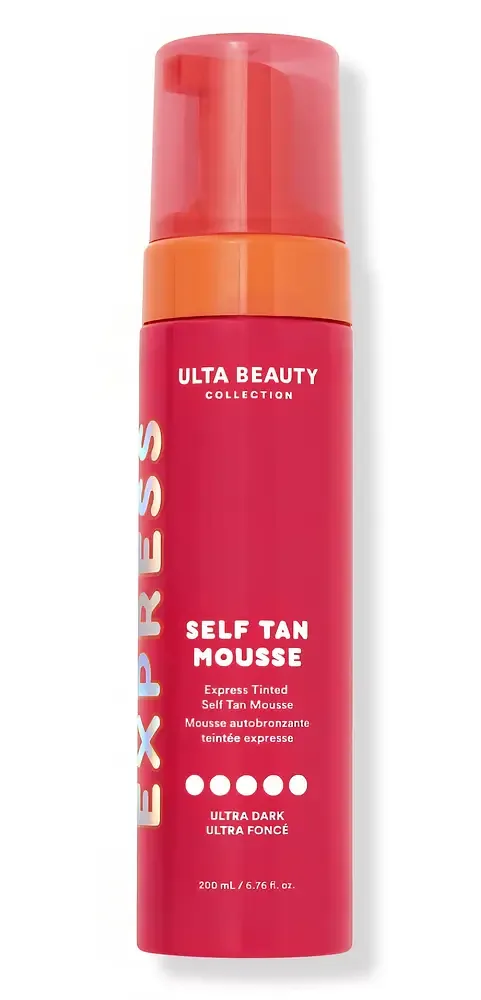
Express Tinted Self Tan Mousse
The ULTA Express Tinted Self Tan Mousse is a misc. Our analysis of its 41 ingredients (24 low-risk) rates it Excellent (90/100). Based on its ingredients, it looks well-suited to dry skin. Heads up: it contains fragrance, which can irritate sensitive or reactive skin.
The ULTA Express Tinted Self Tan Mousse is a misc. Our analysis of its 41 ingredients (24 low-risk) rates it Excellent (90/100). Based on its ingredients, it looks well-suited to dry skin. Heads up: it contains fragrance, which can irritate sensitive or reactive skin.
Summarised from our ingredient analysis — not brand marketing copy.
The evidence
 Dry Skin
9/3
Dry Skin
9/3
 Oily/Acne-Prone Skin
No data
Oily/Acne-Prone Skin
No data
 Sensitive Skin
2/12
Sensitive Skin
2/12
| EWG | CIR | Ingredient Name & Cosmetic Functions | Notes |
|---|---|---|---|
 1
1
|

|
Water
(Solvent) |
|
|
3
|
 B
B
|
Propylene Glycol
(Fragrance, Humectant, Skin Conditioningagent Miscellaneous, Solvent, Viscosity Decreasing Agent, Skin Conditioning, Viscosity Controlling) |

Good for Dry Skin
|
 1
4
1
4
|
|
Dihydroxyacetone
(Cosmetic Colorant, Skin Conditioning, Reducing, Tanning) |
|
|
3
|
B
|
PEG-6 Caprylic/Capric Glycerides
(Skin Conditioning, Emollient, Emulsifying, Surfactant) |
|
|
4
|
B
|
PEG-7 Glyceryl Cocoate
(Skin Conditioning, Emollient, Emulsifying, Surfactant) |

Fungal Acne Trigger
|
|
3
|
B
|
Polysorbate 20
(Emulsifying, Surfactant) |
Fungal Acne Trigger
|
|
4
|
 A
A
|
Phenoxyethanol
(Fragrance, Preservative) |

Paraben
|
|
3
|
|
Dihydroxypropyl PEG-5 Linoleammonium Chloride
(Antistatic Agent, Hair Conditioning) |
|

|
|
PARFUM
(Fragrance, Perfuming) |
|
|
1
|
A
|
Ethylhexylglycerin
(Deodorant, Skin Conditioning) |
|
|
4
|
A
|
Sodium Metabisulfite
(Antioxidant, Preservative, Reducing) |
|
|
|
|
ASCORBIC ACID
(Antioxidant, Buffering, Fragrance, Skin Conditioning) |
|
|
1
|
A
|
Moringa Oleifera Seed Oil
(Emollient, Skin Conditioning) |
|
|
1
|
|
Salvia Hispanica Seed Oil
(Moisturising, Skin Conditioning) |
|
|
1
|
A
|
Schinziophyton Rautanenii Kernel Oil
(Emollient) |
|
|
|
|
Cocos Nucifera Fruit Juice
(Hair Conditioning, Humectant, Skin Conditioning, Skin Conditioning Emollient) |
|
|
1
|
A
|
Tapioca Starch
(Viscosity Increasing Agent) |
|
|
1
|
A
|
Argania Spinosa Kernel Oil
(Emollient, Skin Conditioning) |
Fungal Acne Trigger
|
|
|
|
cocos nucifera oil
(Fragrance, Hair Conditioning, Perfuming, Skin Conditioning) |
|
|
|
|
Cucumis Sativus Seed Oil
(Skin Conditioning, Skin Conditioning Emollient) |
|
|
1
|
A
|
Macadamia Integrifolia Seed Oil
(Skin Conditioning) |
|
|
|
|
PERSEA GRATISSIMA OIL
(Skin Conditioning) |
|
|
1
|
|
Rosa Moschata Seed Oil
(Emollient, Skin Conditioning) |
Fungal Acne Trigger
|
|
|
|
SIMMONDSIA CHINENSIS SEED OIL
(Hair Conditioning, Skin Conditioning, Skin Conditioning Emollient) |
|
|
|
|
VITIS VINIFERA SEED OIL
(Skin Conditioning, Skin Conditioning Emollient) |
|
|
1
|
A
|
Sodium Hyaluronate
(Skin Conditioning, Humectant) |
Good for Dry Skin
|
|
3
|
|
Tocopheryl Acetate
(Antioxidant, Skin Conditioning) |

Bad for Oily Skin
|
|
6
|
|
Limonene
(Deodorant, Perfuming, Solvent) |

Allergens
|
|
|
|
Hexamethylindanopyran
(Masking, Perfuming) |
|
|
5
|
|
Linalool
(Fragrance, Deodorant, Masking) |
Allergens
|
|
1
|
|
Tetramethyl Acetyloctahydronaphthalenes
(Masking, Perfuming, Skin Conditioning) |
|
|
1
|
|
Geranyl Acetate
(Fragrance, Perfuming, Tonic) |
|
 7
7
|
|
Hydroxycitronellal
(Fragrance, Masking) |
Allergens
|
|
1
|
|
Vanillin
(Flavoring Agent, Fragrance, Masking) |
|
|
1
|
|
Linalyl Acetate
(Fragrance, Masking) |
|
|
5
|
|
Citronellol
(Fragrance, Masking) |
Allergens
|
|
1
|
|
Caramel
(Colorant, Fragrance, Cosmetic Colorant, Masking) |
|
|
3
|
|
CI 16035
(Cosmetic Colorant) |
|
|
3
|
|
CI 19140
(Colorant, Cosmetic Colorant) |
|
|
2
|
|
CI 42090
(Colorant, Cosmetic Colorant) |
|
|
2
|
|
CI 17200
(Cosmetic Colorant) |
No personal ingredient notes yet. Save ingredients to your profile to get good/bad alerts here.
EWG flags hazard, not real-world risk — ratings don't account for how much of an ingredient a product contains. Treat these as things to research, not verdicts. How we score →
How to use
General guidance from this product's category and active ingredients — always follow the directions on the package.
Trust & honesty
The concentrations these actives are typically effective at in research — not a measurement of this product.
L-ascorbic acid is usually used at 5–20% (around 10–15% is common). Above ~20% adds little and tends to irritate more; it also needs a low pH to work.
ASCORBIC ACID
INCI lists don't disclose amounts, and we don't claim to know this product's levels — these are the ranges these ingredients are usually effective at, so you can tell a real formula from "fairy-dusting" a marketed active. How we estimate this.
From the community
Used this product? Rate it in 10 seconds
Alternatives
Other products people analyze alongside this one.