



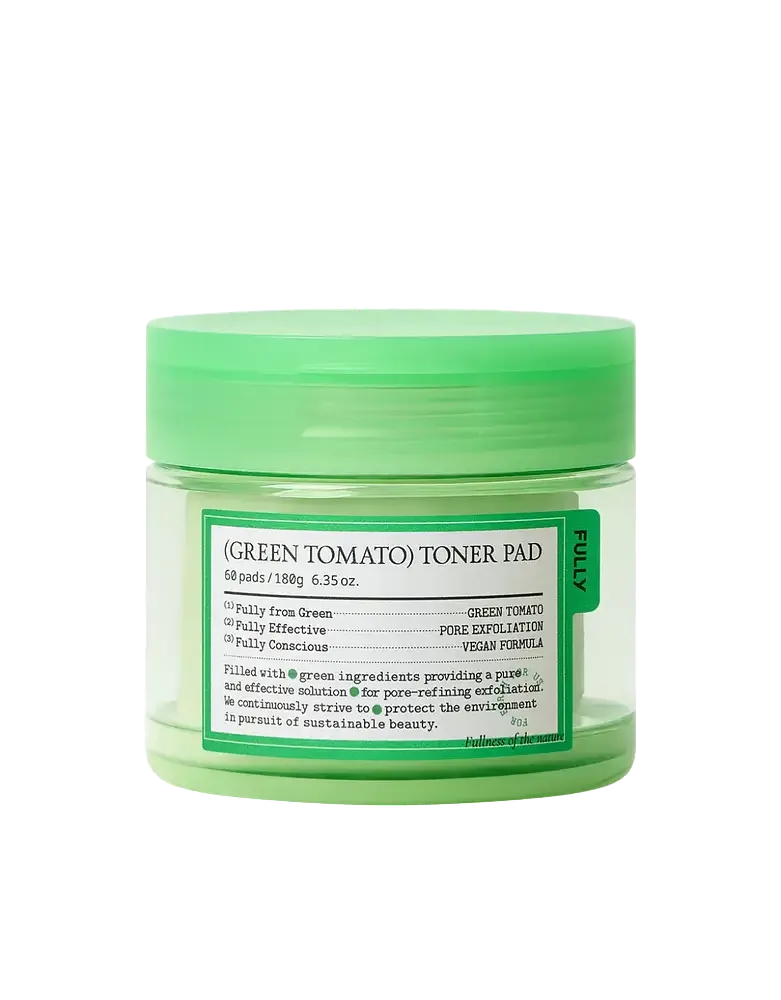
Green Tomato Toner Pad
The Fully Green Tomato Toner Pad is a toner. Our analysis of its 31 ingredients (21 low-risk) rates it Excellent (97/100). Based on its ingredients, it looks well-suited to oily / acne-prone, dry, and sensitive skin.
The Fully Green Tomato Toner Pad is a toner. Our analysis of its 31 ingredients (21 low-risk) rates it Excellent (97/100). Based on its ingredients, it looks well-suited to oily / acne-prone, dry, and sensitive skin.
Summarised from our ingredient analysis — not brand marketing copy.
The evidence
 Dry Skin
5/2
Dry Skin
5/2
 Oily/Acne-Prone Skin
1/0
Oily/Acne-Prone Skin
1/0
 Sensitive Skin
5/5
Sensitive Skin
5/5
| EWG | CIR | Ingredient Name & Cosmetic Functions | Notes |
|---|---|---|---|
 1
1
|

|
Water
(Solvent) |
|
|
1
|
 A
A
|
Butylene Glycol
(Fragrance, Skin Conditioning, Solvent, Viscositydecreasing Agent, Humectant, Masking, Viscosity Controlling) |

Good for Dry Skin
|
|
1
|
A
|
Niacinamide
(Hair Conditioning, Skin Conditioning, Smoothing) |
|
|
1
|
A
|
1,2-Hexanediol
(Solvent) |
|

|
|
Solanum Lycopersicum Fruit
(Humectant, Skin Conditioning, Skin Conditioning Emollient) |
|
 4
4
|
 B
B
|
Lactic Acid
(Exfoliant, Fragrance, Humectant, Ph Adjuster, Skin Conditioning Agent Humectant, Skin Conditioning, Buffering Agent) |

Bad for Sensitive Skin
|
|
1
|
A
|
Arginine
(Fragrance, Hair Conditioning, Skin Conditioning, Antistatic Agent, Masking) |
|
|
1
|
|
Polyglycerin-3
(Humectant) |
|
|
1
|
A
|
Ethylhexylglycerin
(Deodorant, Skin Conditioning) |
|
|
1
|
|
Adenosine
(Skin Conditioning) |
|
|
1
|
A
|
Disodium EDTA
(Chelating Agent, Viscosity Controlling) |
|
|
1
|
|
Melia Azadirachta Leaf Extract
(Antimicrobial, Skin Protecting) |
|
|
|
|
Solanum Lycopersicum Fruit Juice
(Skin Conditioning) |
|
|
1
|
A
|
Xanthan Gum
(Binding Agent, Emulsion Stabilising, Skin Conditioning, Surfactant Emulsifying Agent, Viscosity Increasing Agent, Binding, Gel Forming, Viscosity Controlling) |
|
|
1
|
|
Melia Azadirachta Flower Extract
(Skin Conditioning) |
|
|
|
|
Oenothera Biennis Flower Extract
(Astringent) |
|
|
2
|
|
Pinus Palustris Leaf Extract
(Tonic) |
|
|
1
|
|
Maranta Arundinacea Root Extract
(Smoothing) |
|
|
|
|
Ulmus Davidiana Root Extract
(Skin Conditioning) |
|
|
1
|
|
Hydroxyacetophenone
(Antioxidant) |
|
|
|
|
Diospyros Kaki Leaf Extract
(Skin Protecting, Tonic) |
|
|
1
|
|
Gluconolactone
(Fragrance, Humectant, Solvent) |
|
|
|
|
Vitis Vinifera Fruit Extract
(Skin Conditioning) |
|
|
|
|
Coffea Arabica Seed Extract
(Fragrance, Skin Conditioning) |
|
|
|
|
Carthamus Tinctorius Flower Extract
(Skin Conditioning) |
|
|
4
|
B
|
Glycolic Acid
(Exfoliant, Ph Adjuster, Buffering Agent) |

Good for Oily Skin
Bad for Sensitive Skin
|
|
1
|
|
Polygonum Cuspidatum Root Extract
(Antioxidant) |
|
|
1
|
B
|
Camellia Sinensis Leaf Extract
(Antimicrobial, Antioxidant, Astringent, Emollient, Humectant, Masking, Oral Care Agent, Skin Conditioning, Skin Protecting, Tonic, Uv Absorber) |
Good for Oily Skin
|
|
1
|
|
Castanea Crenata Shell Extract
(Skin Conditioning) |
|
|
1
|
|
Zanthoxylum Piperitum Fruit Extract
(Skin Conditioning) |
|
|
1
|
B
|
Capryloyl Salicylic Acid
(Skin Conditioning) |
No personal ingredient notes yet. Save ingredients to your profile to get good/bad alerts here.
How to use
General guidance from this product's category and active ingredients — always follow the directions on the package.
Trust & honesty
Contains ingredients some choose to avoid or double-check while pregnant or nursing.
Low-strength topical salicylic acid (BHA) is generally considered fine. Caution is usually reserved for high-strength leave-on products and salicylic peels.
This is general information, not medical advice. Pregnancy guidance varies and depends on concentration and your individual situation — always check with your doctor, midwife or pharmacist. How we flag this.
The concentrations these actives are typically effective at in research — not a measurement of this product.
Most research uses 2–5%; some formulas go to 10%. Very high levels can cause flushing in sensitive skin.
Niacinamide
Salicylic acid is OTC-capped at 2%; 0.5–2% is the usual leave-on range. Much below that it acts more as a soothing agent than an exfoliant.
Capryloyl Salicylic Acid
OTC leave-on AHAs are usually 5–10%. The effect also depends on pH and free-acid value, not the percentage alone.
Lactic Acid, Glycolic Acid
INCI lists don't disclose amounts, and we don't claim to know this product's levels — these are the ranges these ingredients are usually effective at, so you can tell a real formula from "fairy-dusting" a marketed active. How we estimate this.
From the community
Used this product? Rate it in 10 seconds
Alternatives
Other products people analyze alongside this one.